
Services
Home plumbing repairs and installs, from a single leak to a complete house rough-in. If you don’t see your need here, call and ask.
Complete house plumbing
Entire house rough-ins, start to finish: new drain, water and gas lines, flood-tested and inspected before the walls are closed up.
Drain clearing
Slow drains, clogs and backups in sinks, tubs and lines. Call and describe what you are seeing.
Leak repair
Dripping faucets, leaking pipes and failed shutoff valves.
Water heaters
Repair and replacement of tank water heaters.
Toilets
Running, clogged or loose toilets, repaired or replaced.
Faucets and fixtures
Sinks, faucets and showerheads installed or swapped out.
Disposals and hookups
Garbage disposals, dishwasher and washer connections.
Service area
Monroeville, Penn Hills, Plum, Murrysville, Squirrel Hill and the East End, PA
Hours
Monday to Friday, 9 AM to 5 PM
Licensing and insurance
HP# 04109 · HIC# PA184489
Insured, policy # PGR973409067
Recent jobs
Our work
A look at some recent jobs, with notes on what we did and why.
Fixing several leaks in an older home
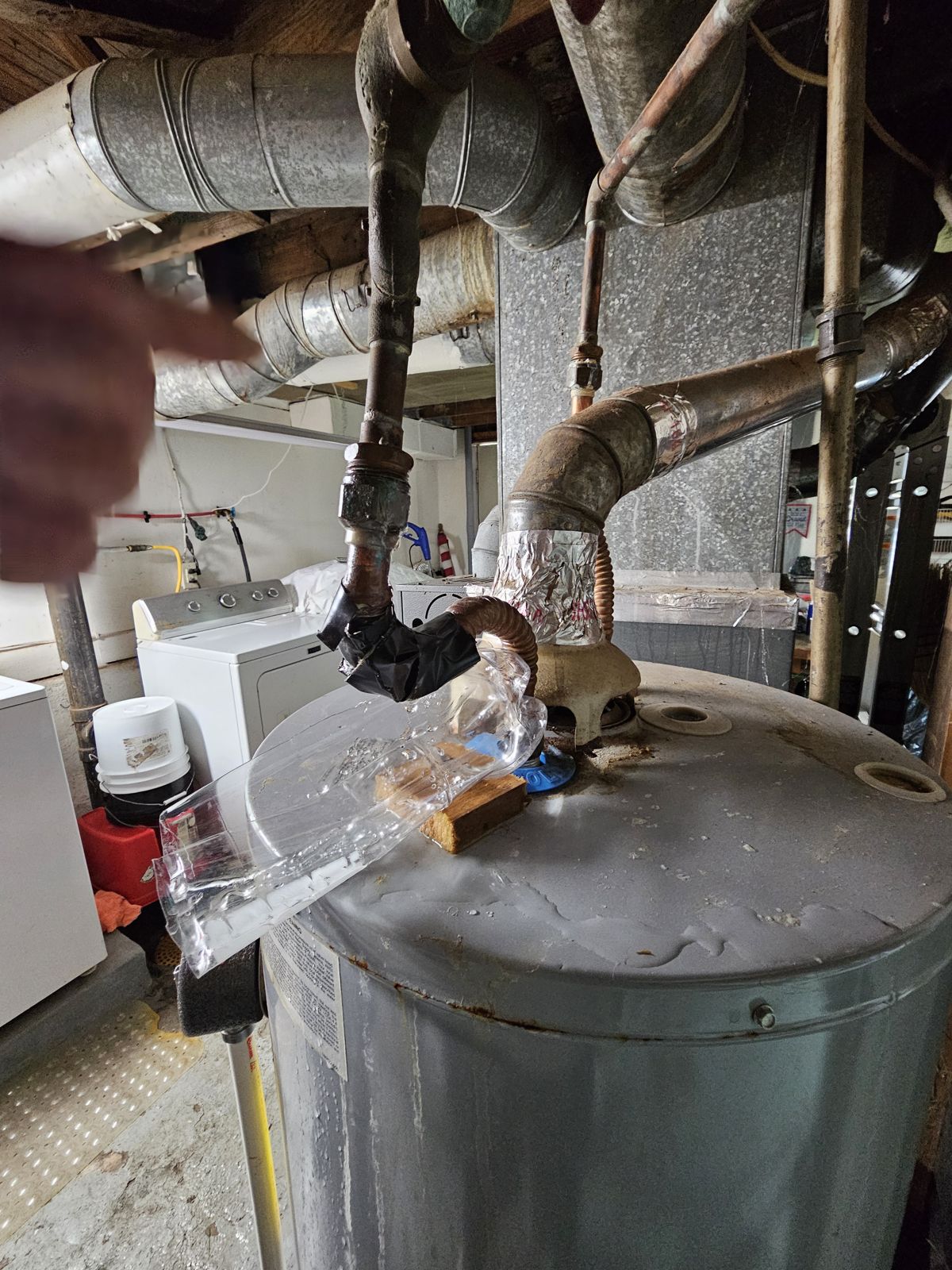
This homeowner had two problems: a leak on his water heater’s supply lines, and a leak in his kitchen ceiling.
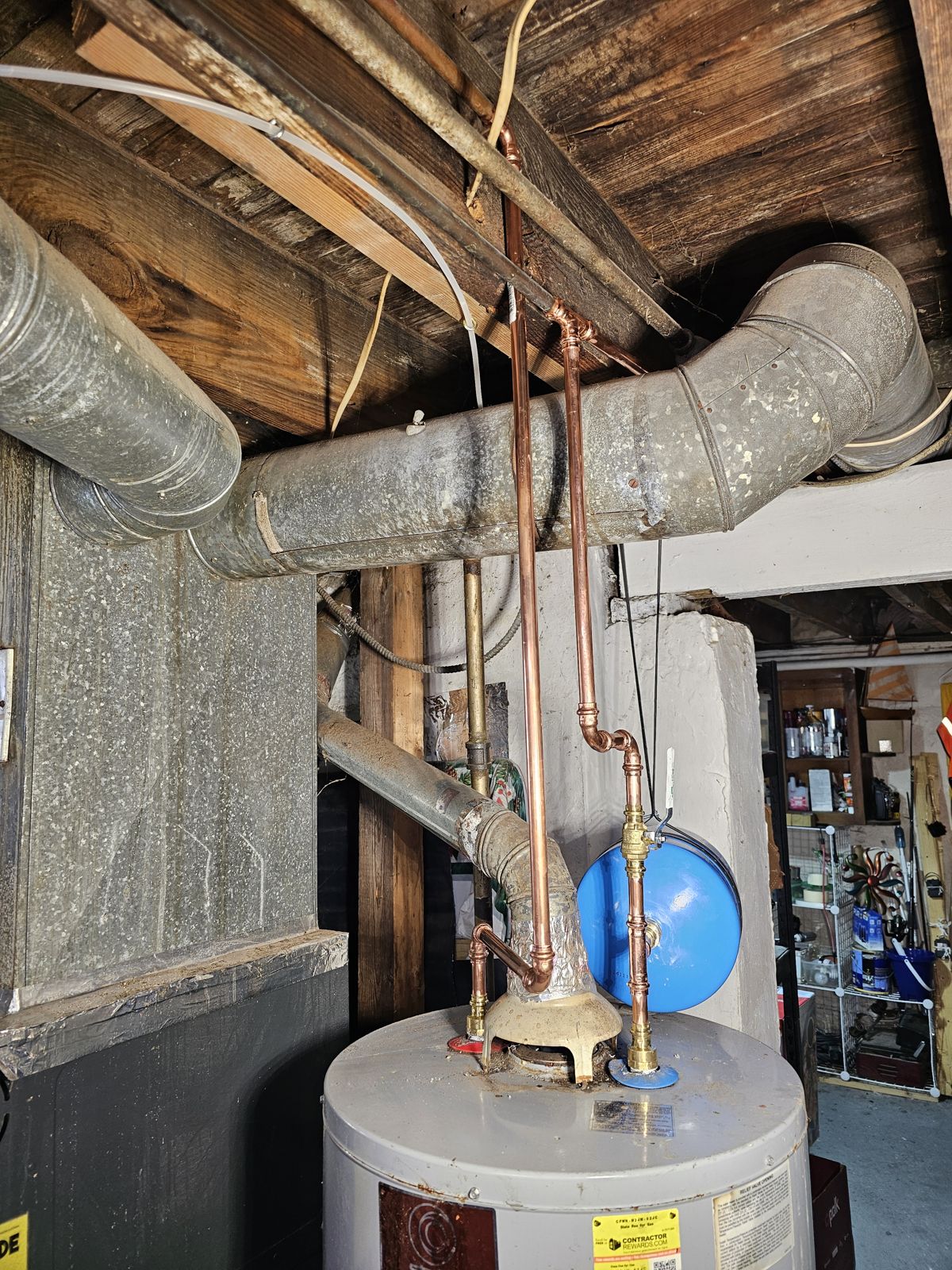
The water heater. Flexible supply lines from a store can leak, so we always use copper connections instead. We join them with ProPress fittings. A special press tool seals the pipe permanently, and the connection meets Allegheny County plumbing code standards.
Watch the connection being made: ProPress fitting video on YouTube.
We also added an expansion tank. A water heater builds up pressure as it heats water, and that pressure needs somewhere to go. The expansion tank gives it room. Without one, the pressure pushes on the other fixtures in your home and can make them leak sooner than they should, such as your bathtub faucet or kitchen faucet.
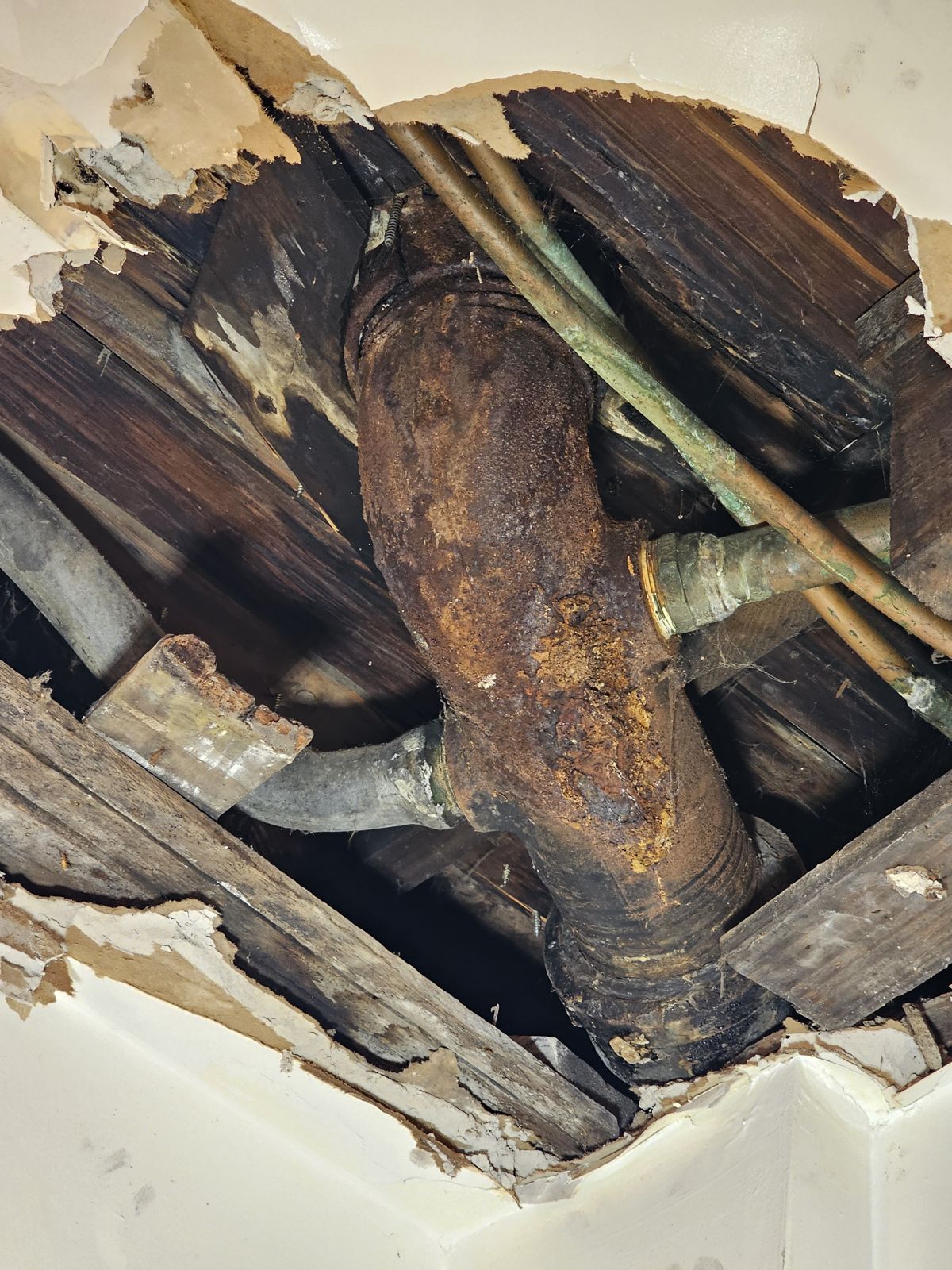
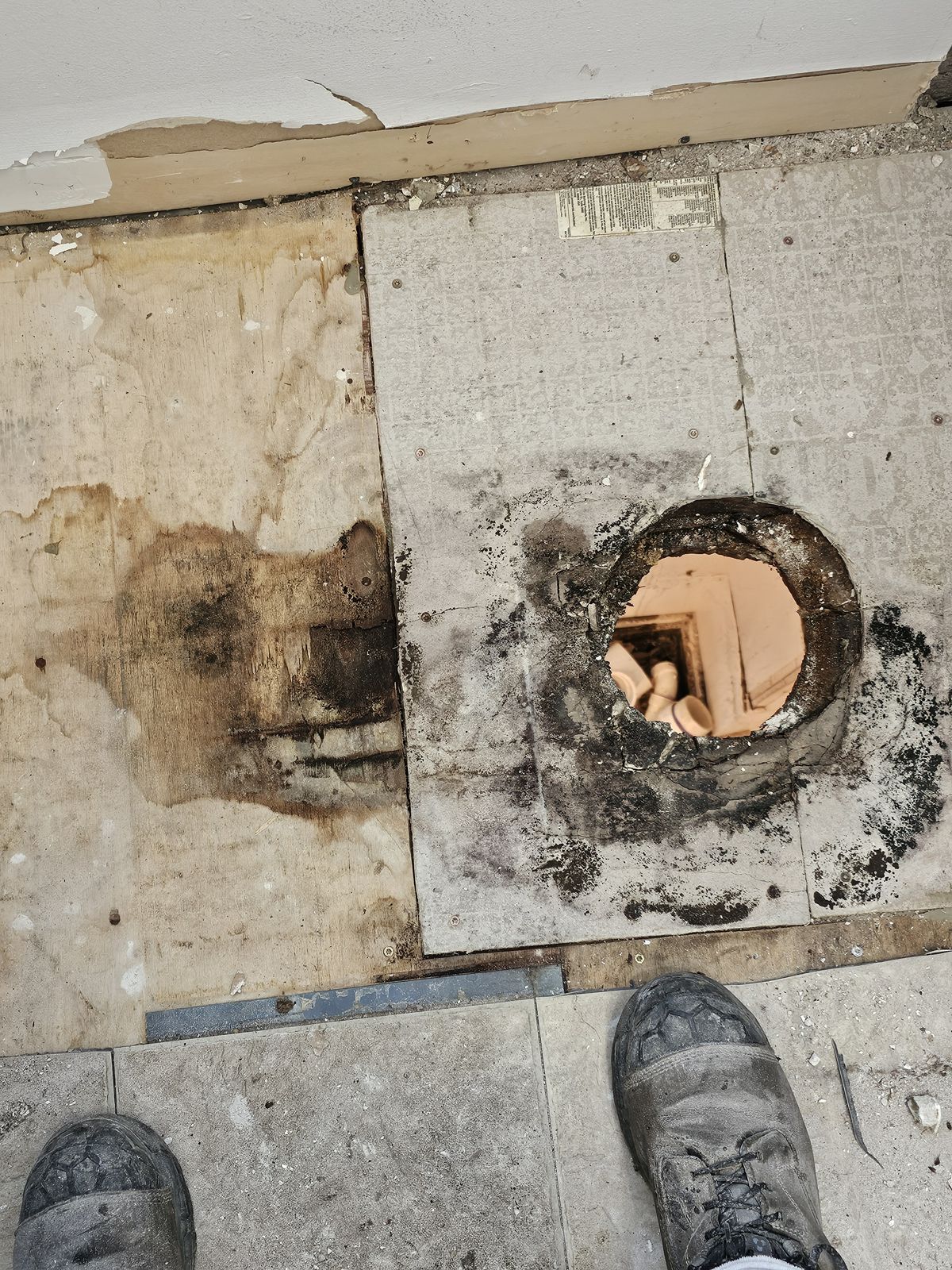
The kitchen ceiling. That leak had been going on for many years. He only noticed it when he saw a drip. When we opened the ceiling and the bathroom floor, we found a lot of hidden mold damage.
The house still had its original cast iron and lead drain lines. In older Pittsburgh homes, most cast iron is leaking in hidden places and needs to be replaced. We use approved Fernco fittings to join the old pipe to our new Schedule 40 PVC pipe.
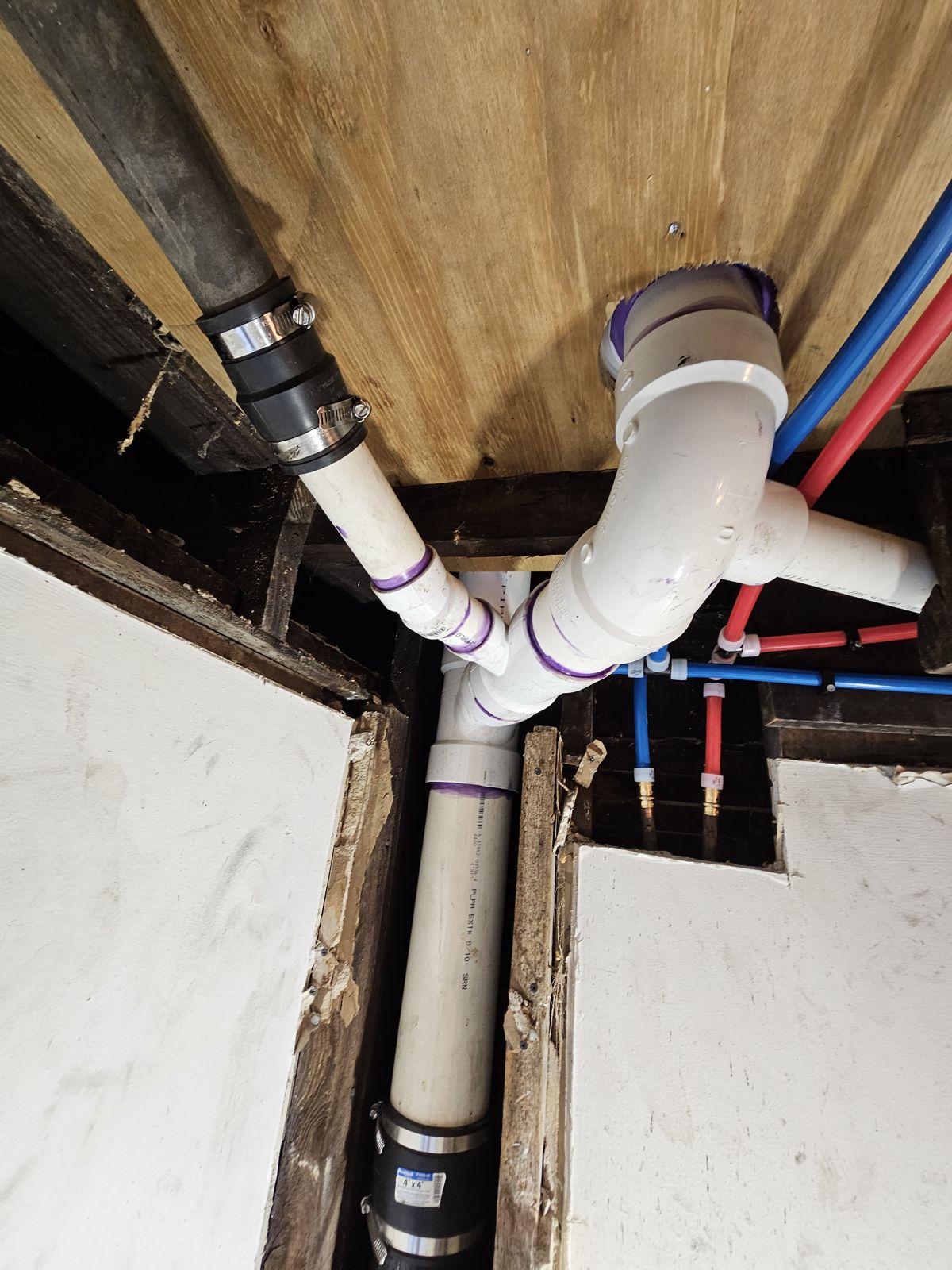
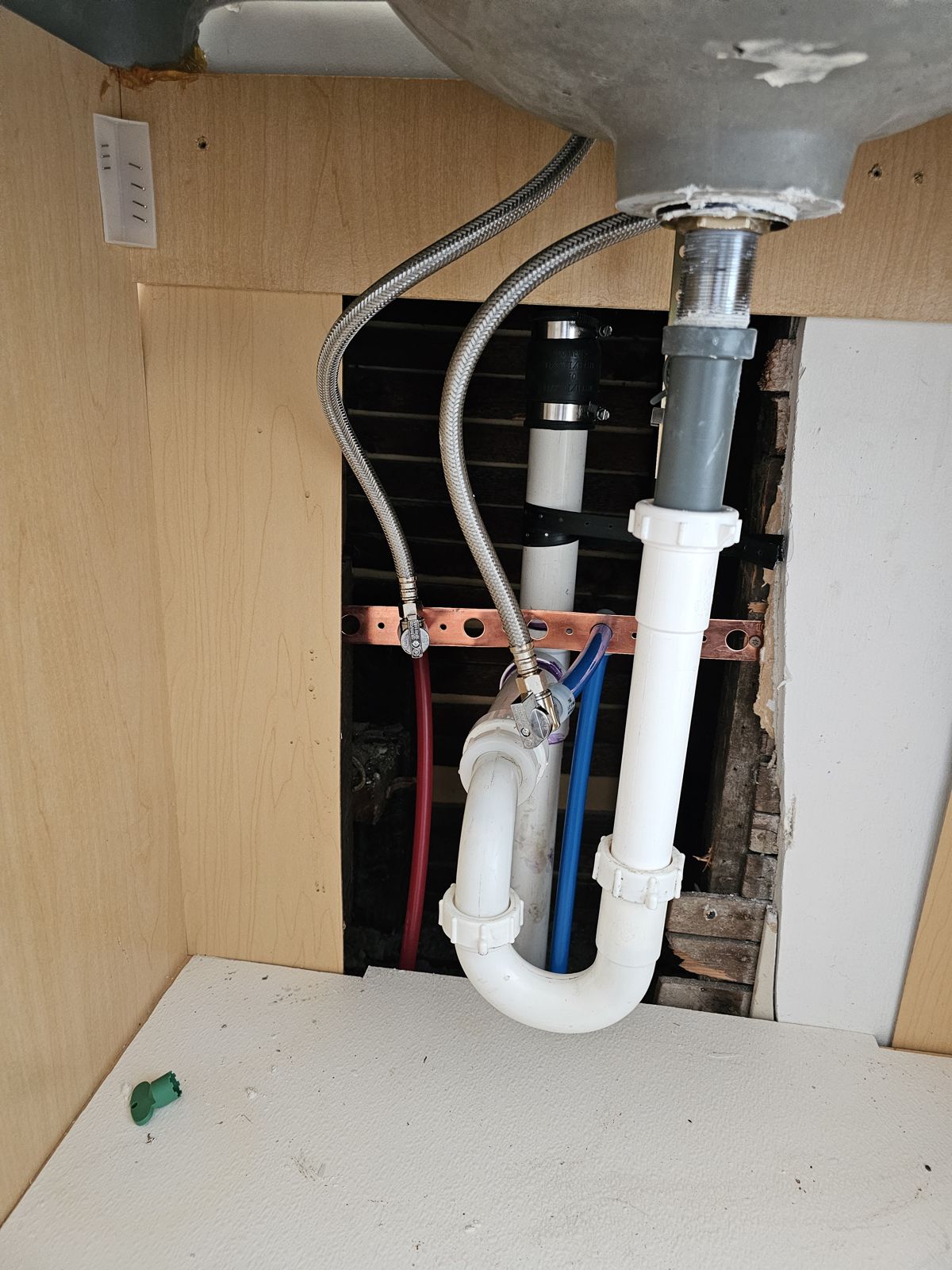
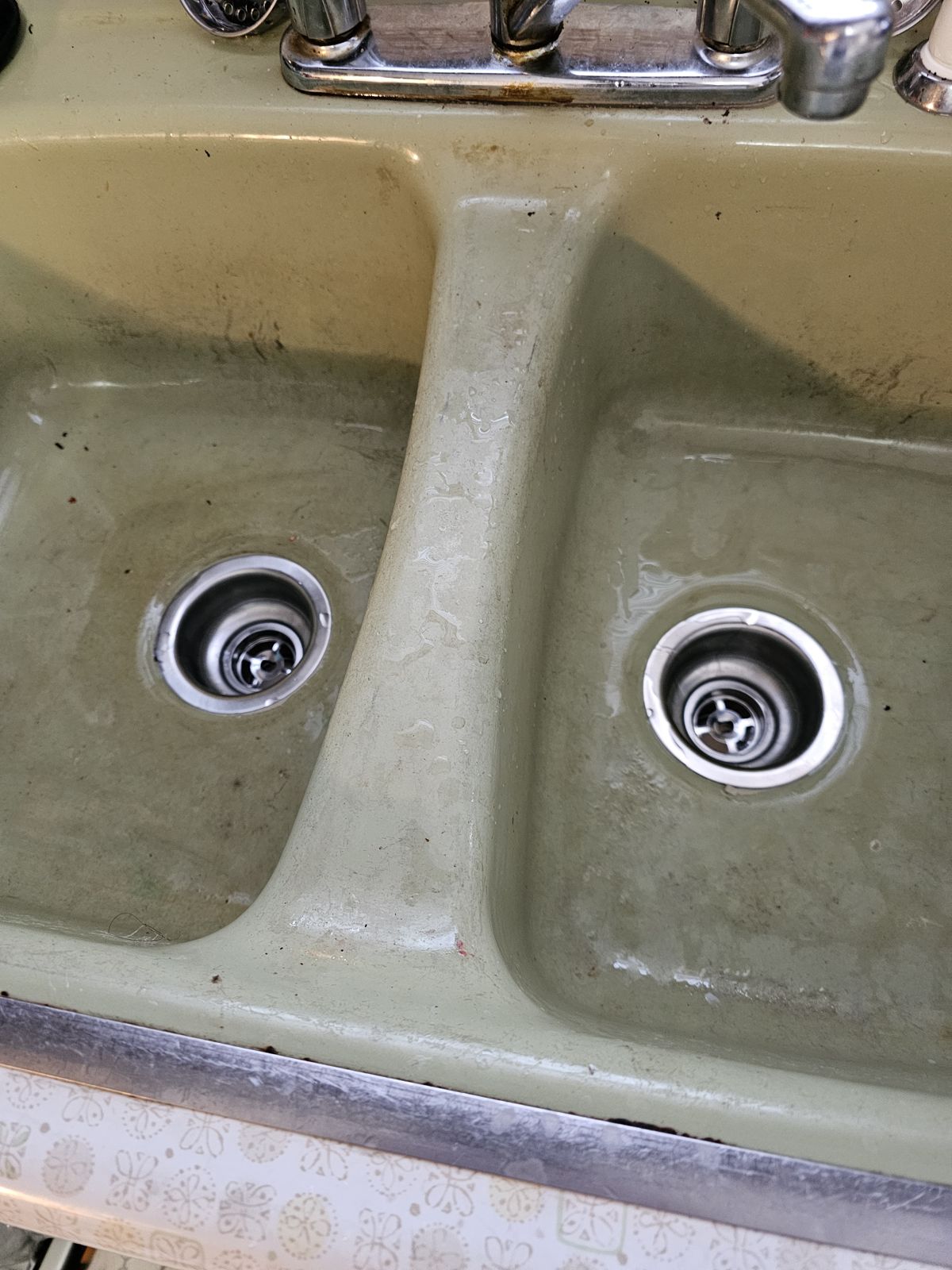
Replacing a leaking kitchen sink drain
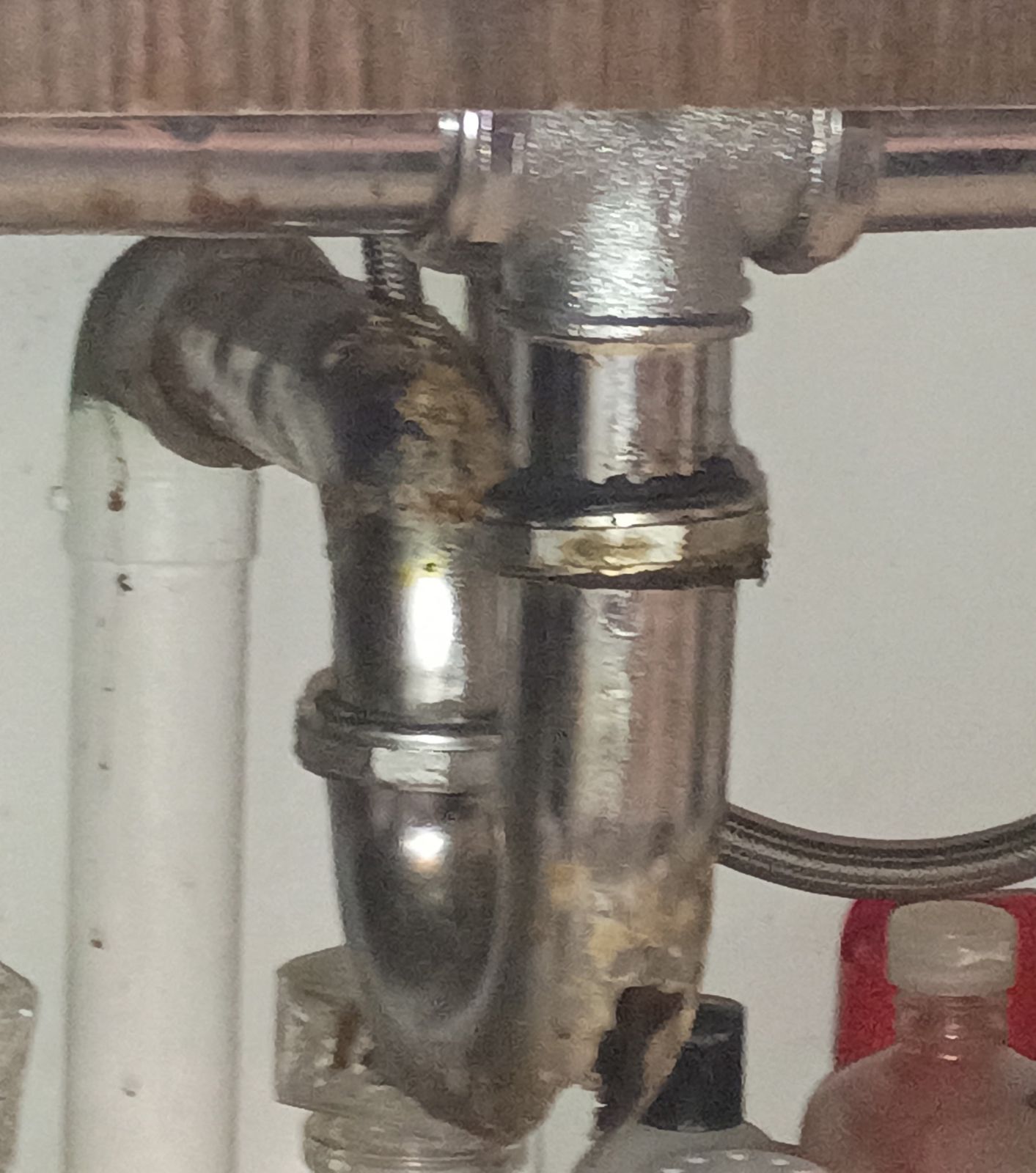
The old P-trap, the curved pipe under the kitchen sink, had completely deteriorated. We also noticed that the drain line was not vented. When a drain isn’t vented correctly, it doesn’t flow properly.
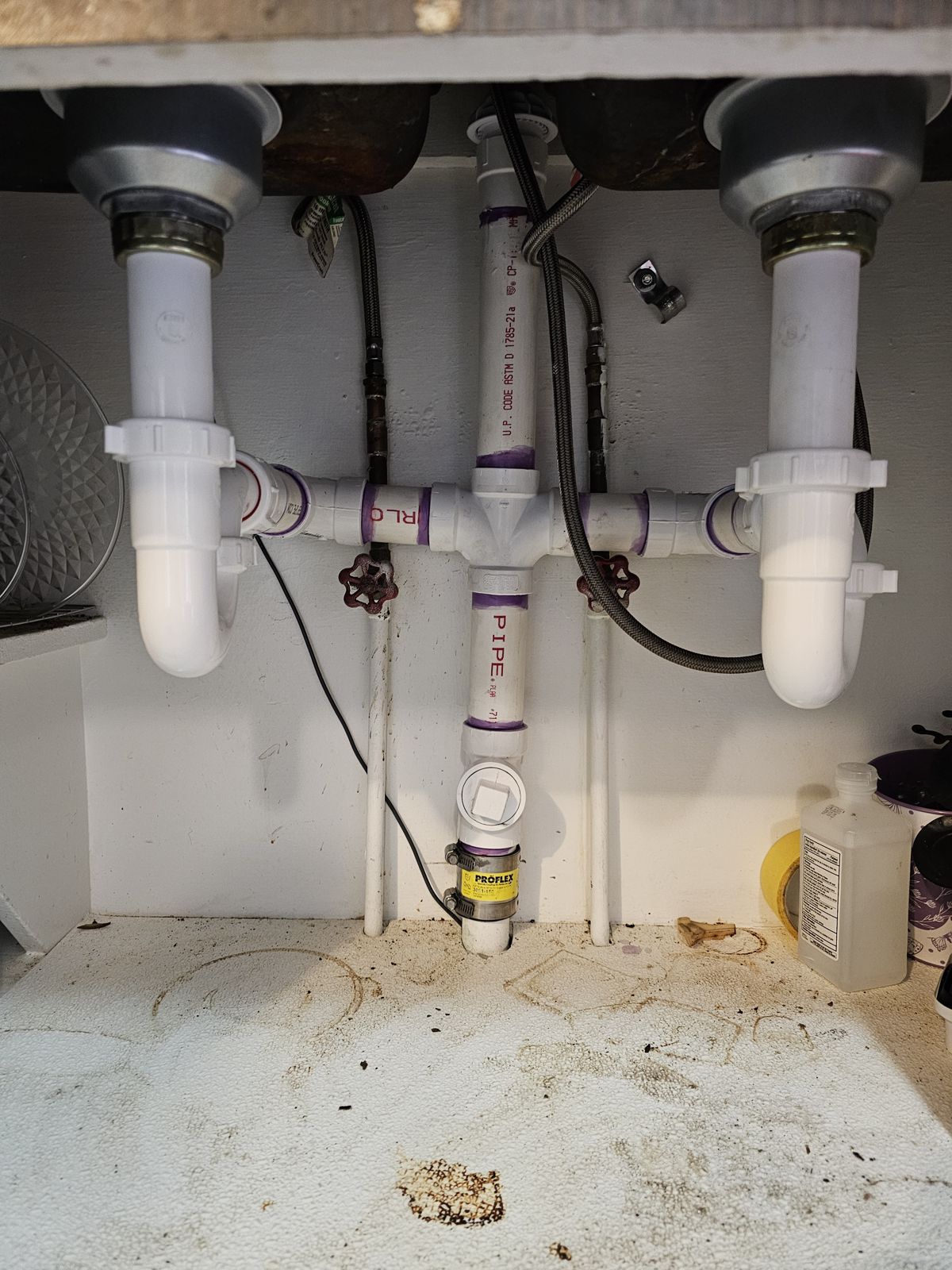
Current plumbing code also calls for each sink to have its own trap. Codes vary by jurisdiction, so whenever we start work in a new area, we check the local building codes to make sure we install everything correctly.
A vent normally needs to run up to the roof. Here, we were able to use an air admittance valve instead. It does the job of a roof vent: it lets the drain breathe without letting sewer gases into your home.
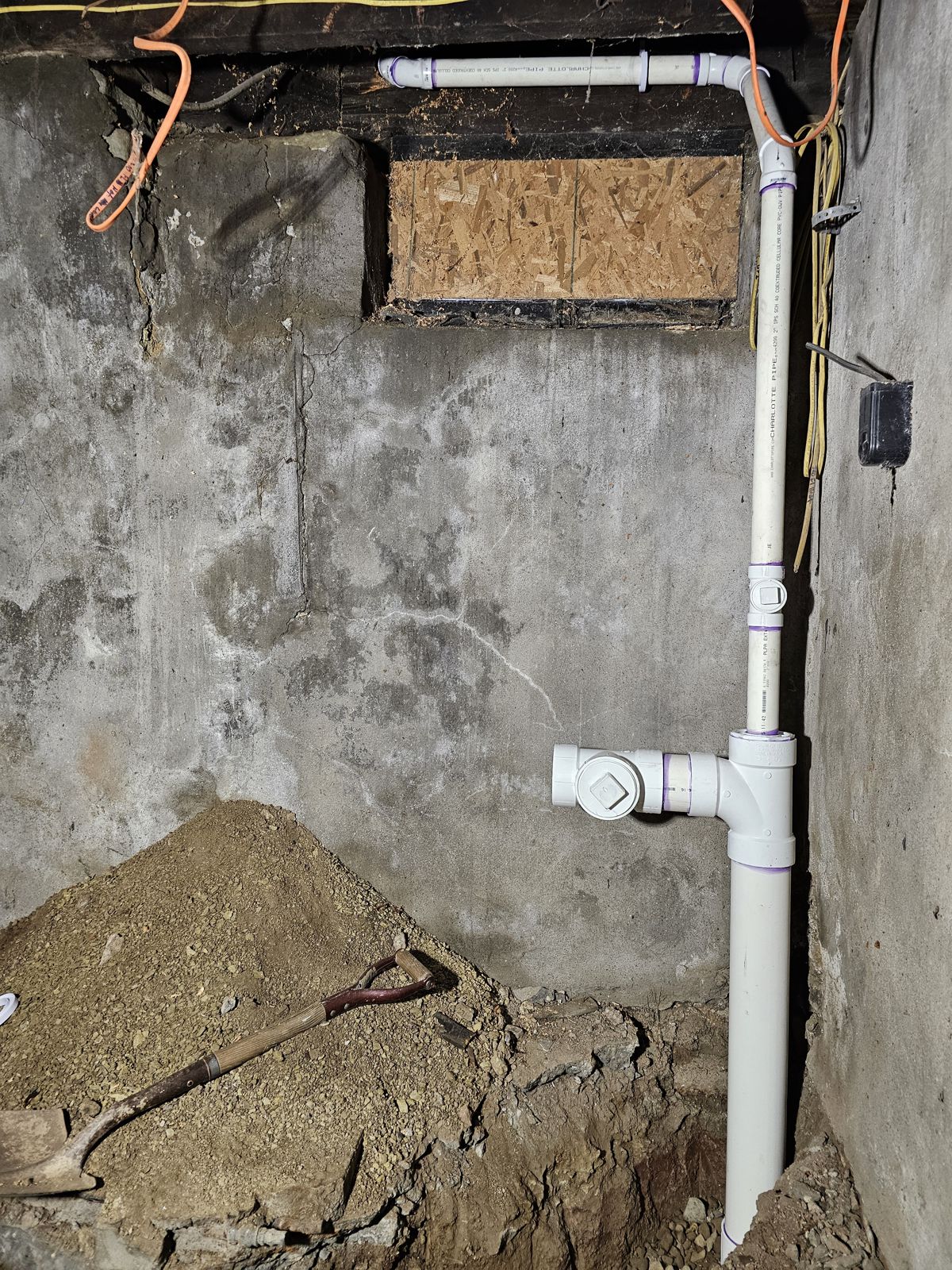
We also installed a cleanout. If the old line ever backs up, it can be snaked easily.
Full house rough-in: new drains, water lines and house trap
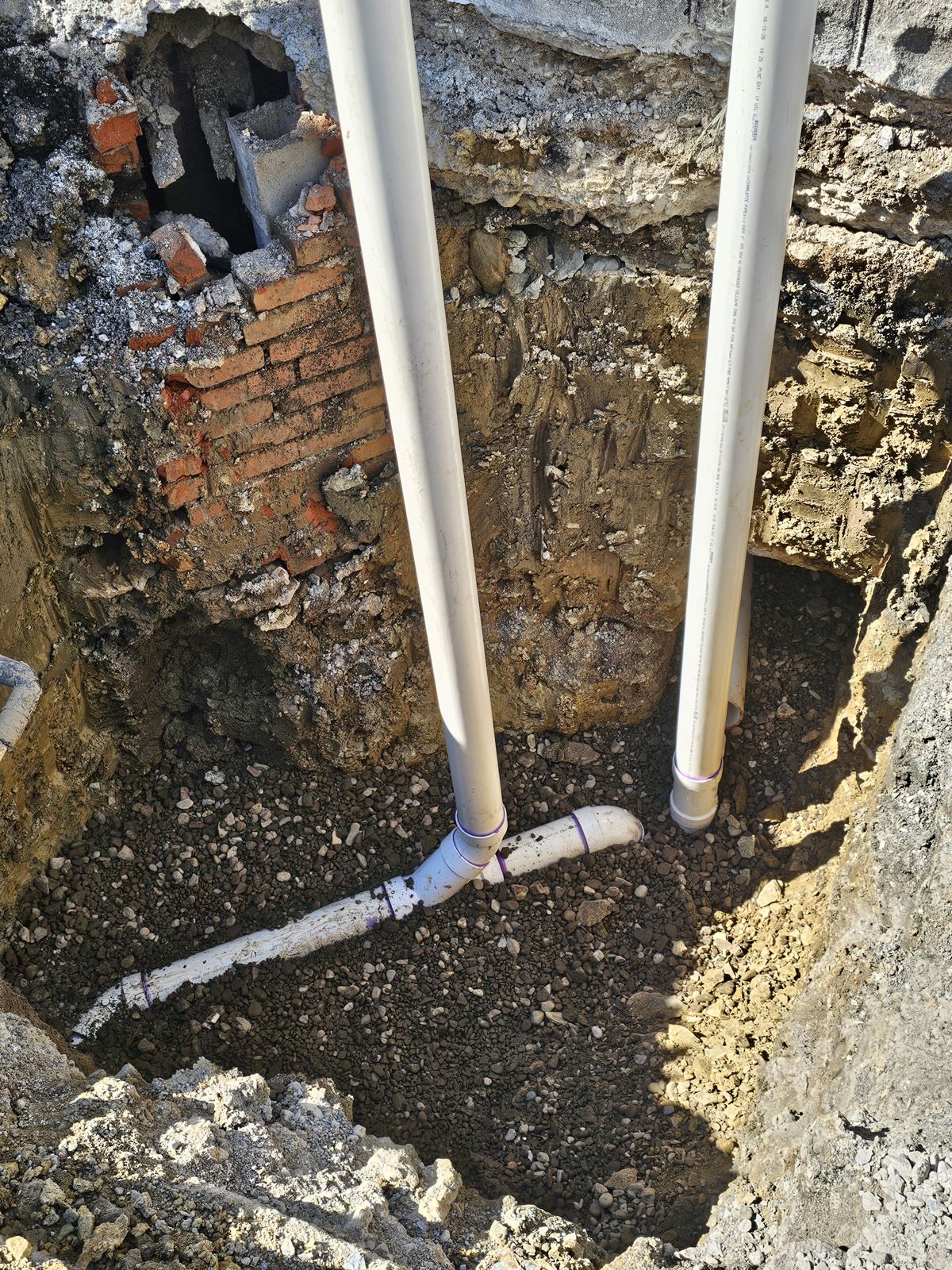
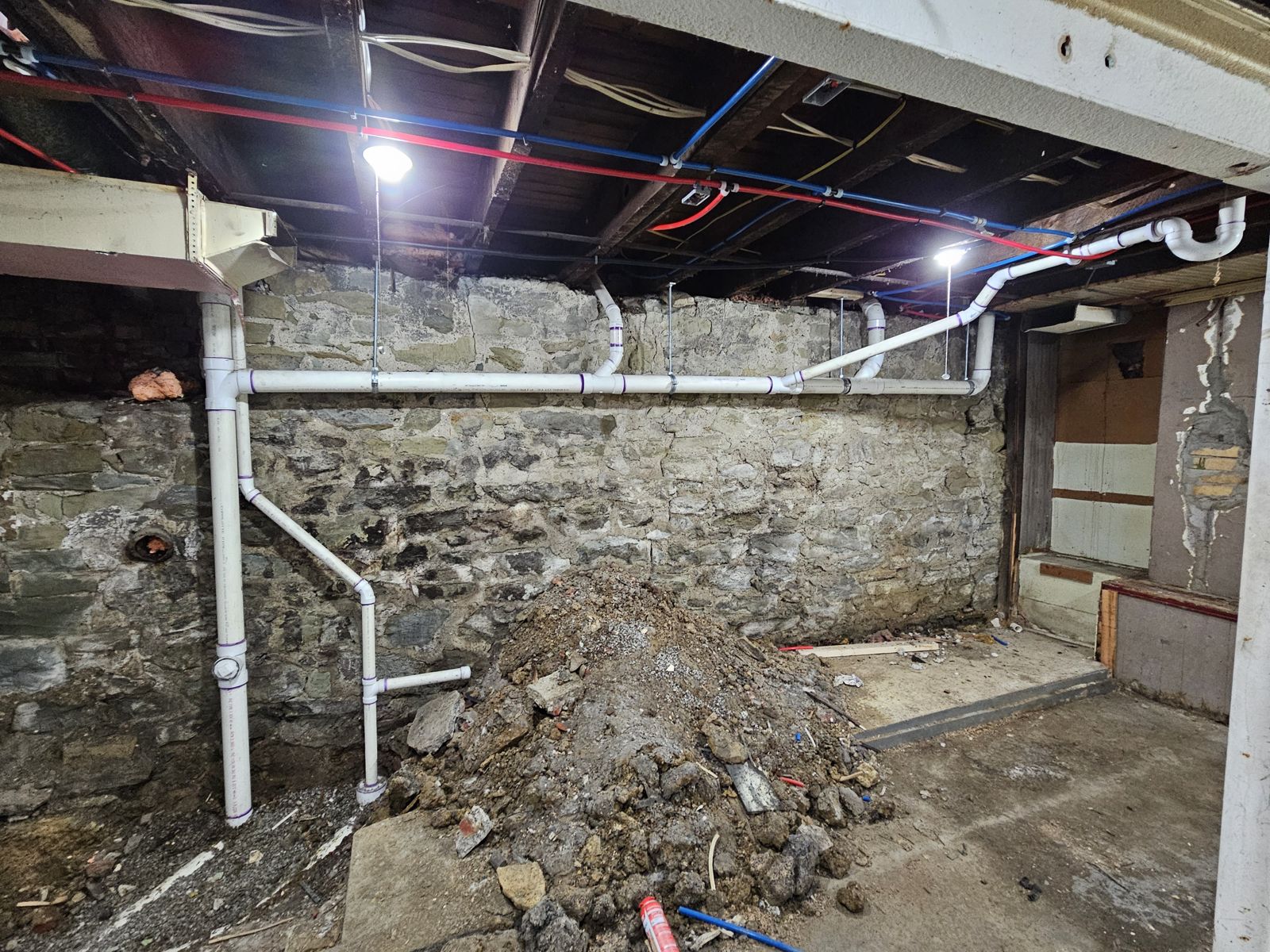
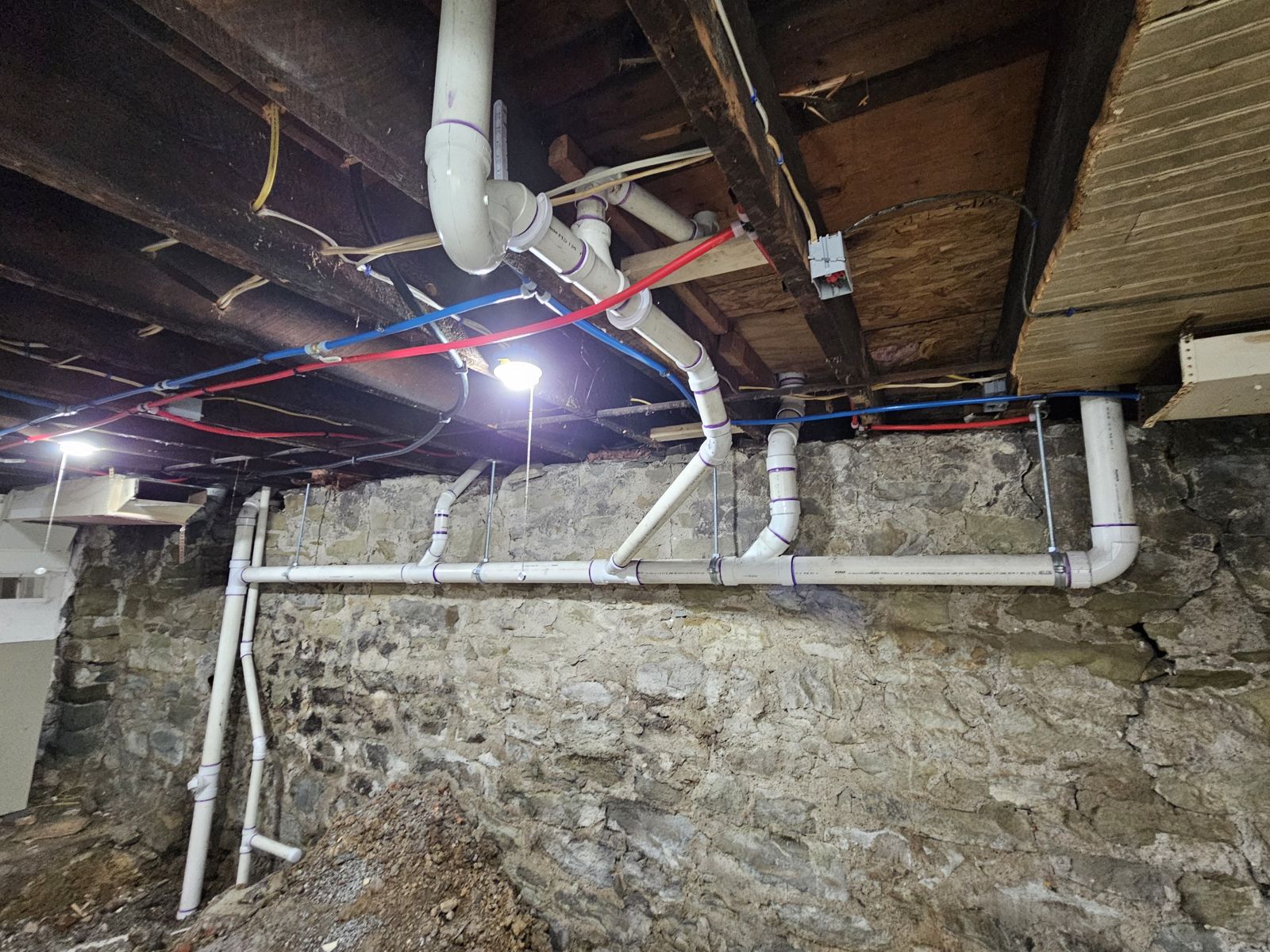
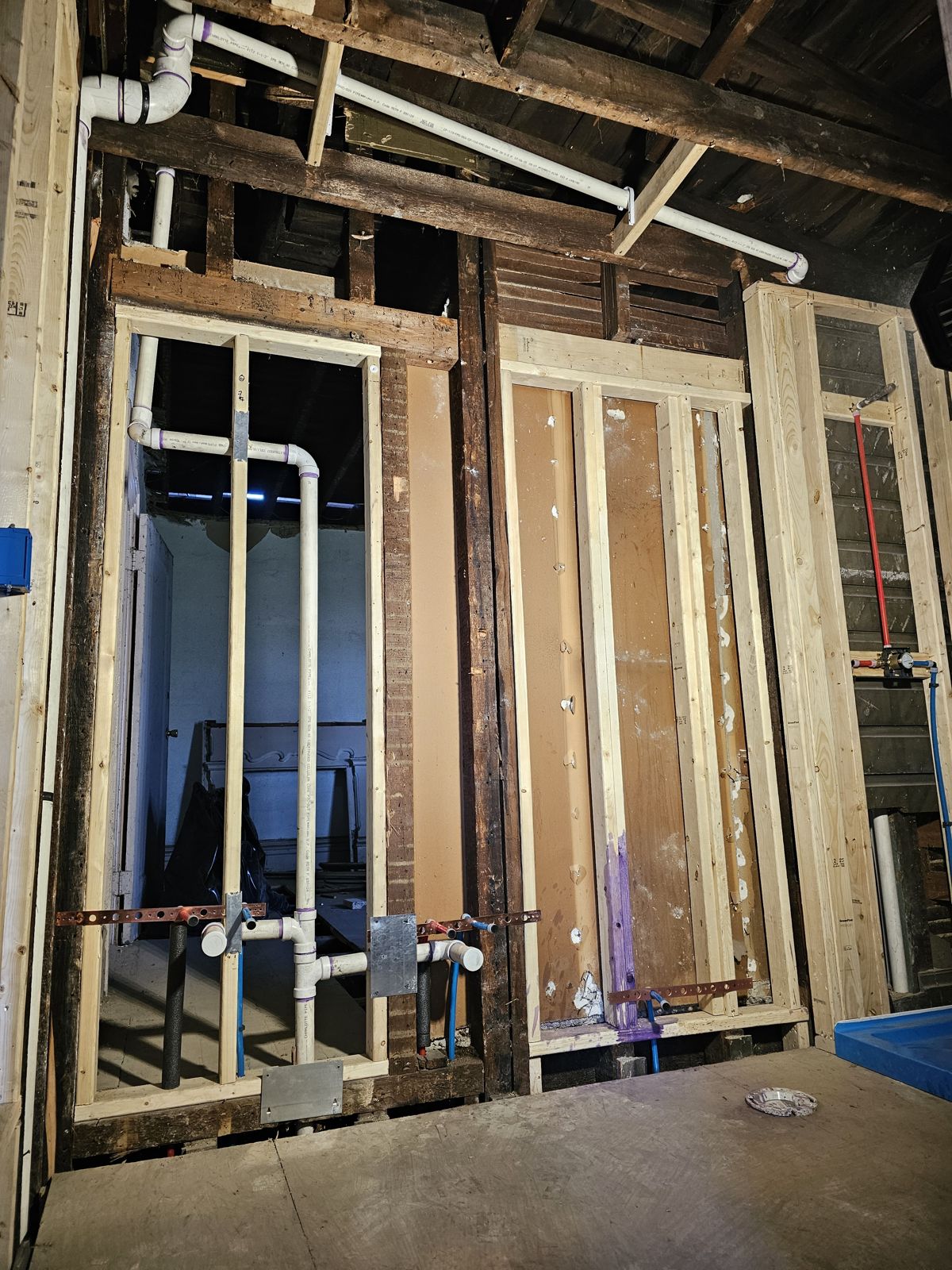
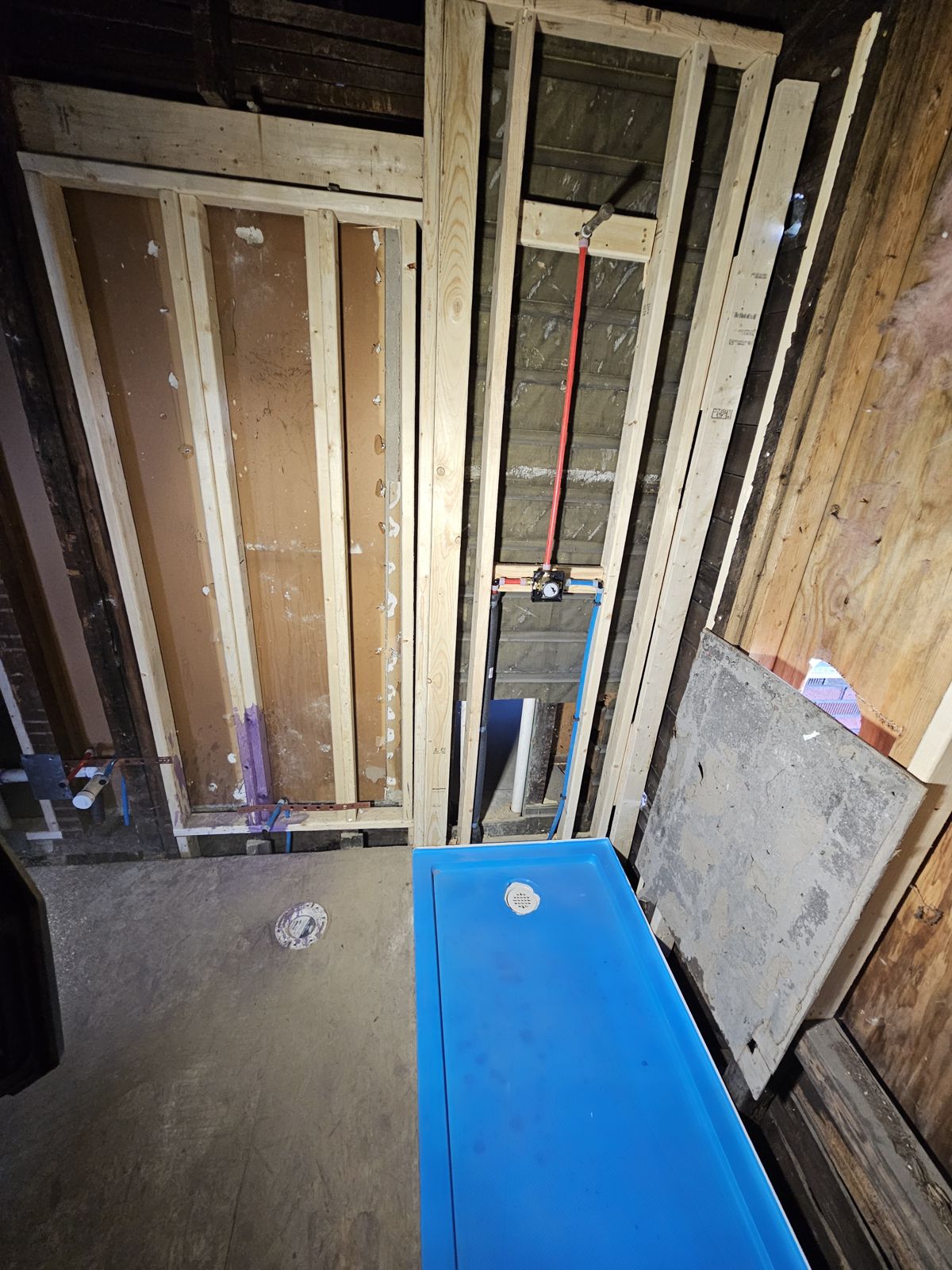
This job was a full house rough-in. Rough-in is the stage where all the new pipes go in, before the walls and floors are closed up.
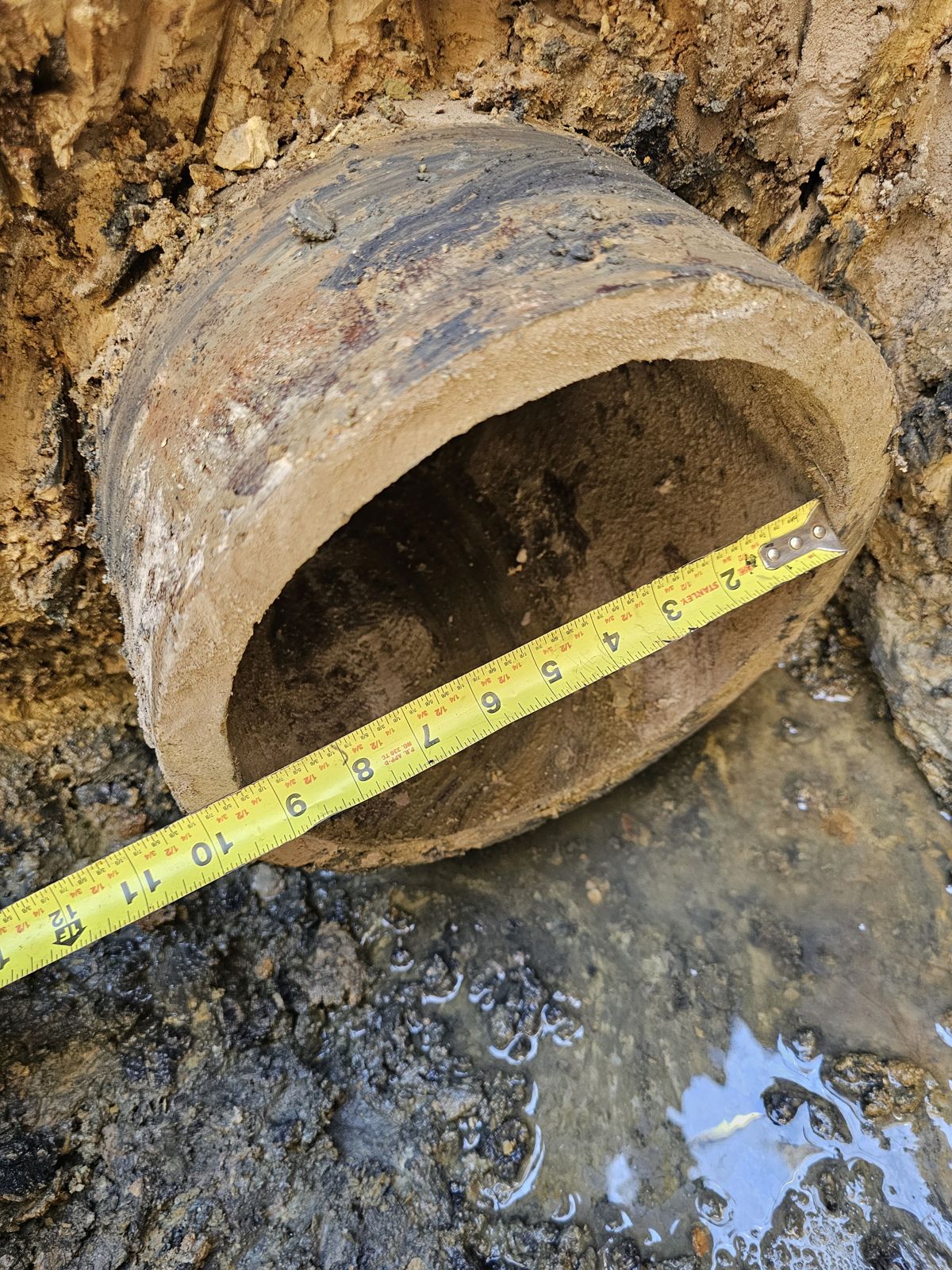
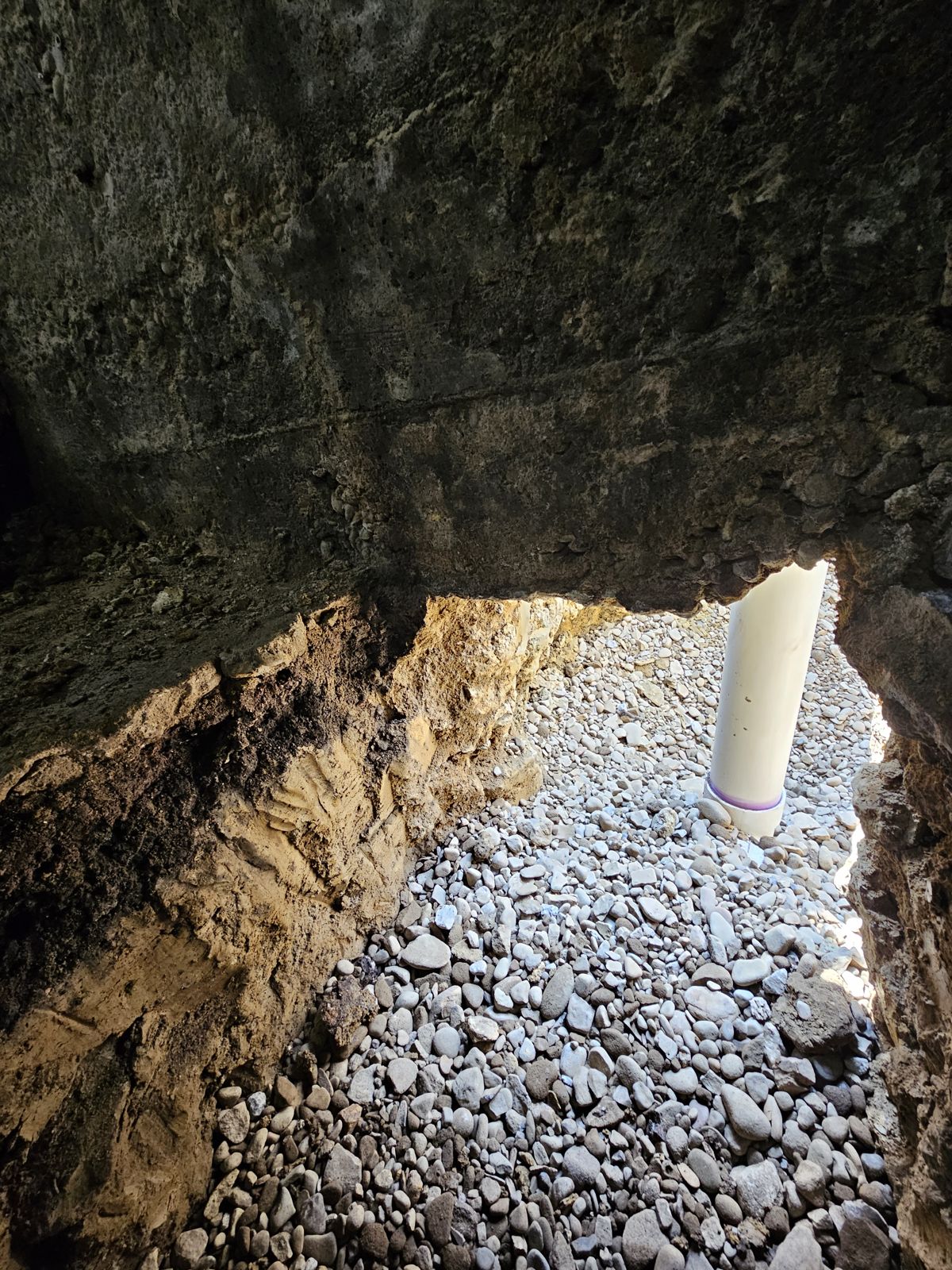
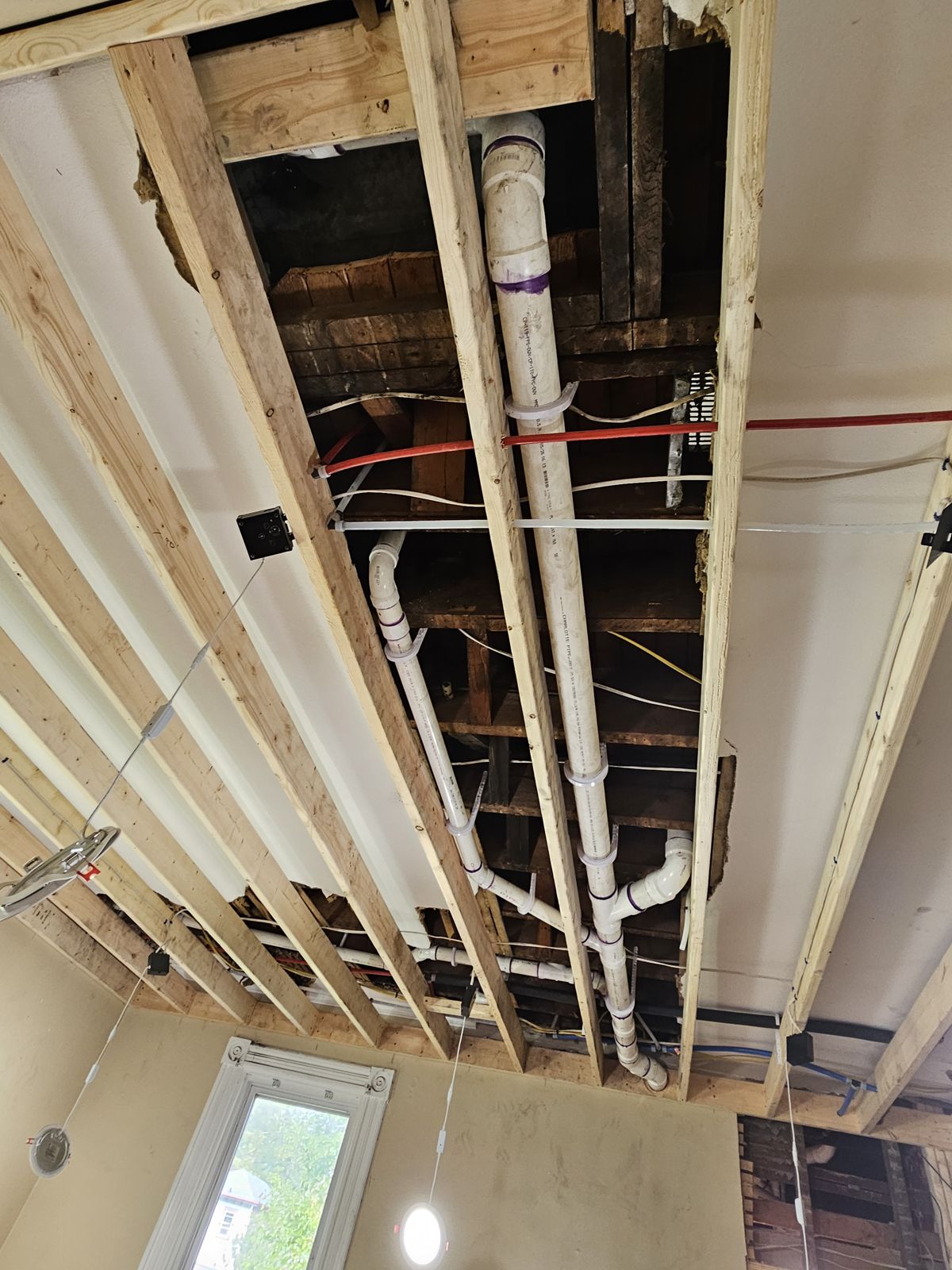
We installed all-new Schedule 40 PVC drain lines and PEX water lines. We also installed a new house trap and connected it, outside the house, to the existing terracotta pipe.
Before anything was covered up, we flood-tested everything and had the Allegheny County Health Department inspect the work.
Full house rough-in with new gas lines
This was another full house rough-in, and it passed inspection. Here are a few of the things we did on this job, and why.
A pan under the second-floor washing machine. When a washing machine is on a second floor, we put a pan under it. The pan’s drain line is run down to the basement, so the homeowner can see if it ever leaks. That way a leak is caught before it ruins the floor.
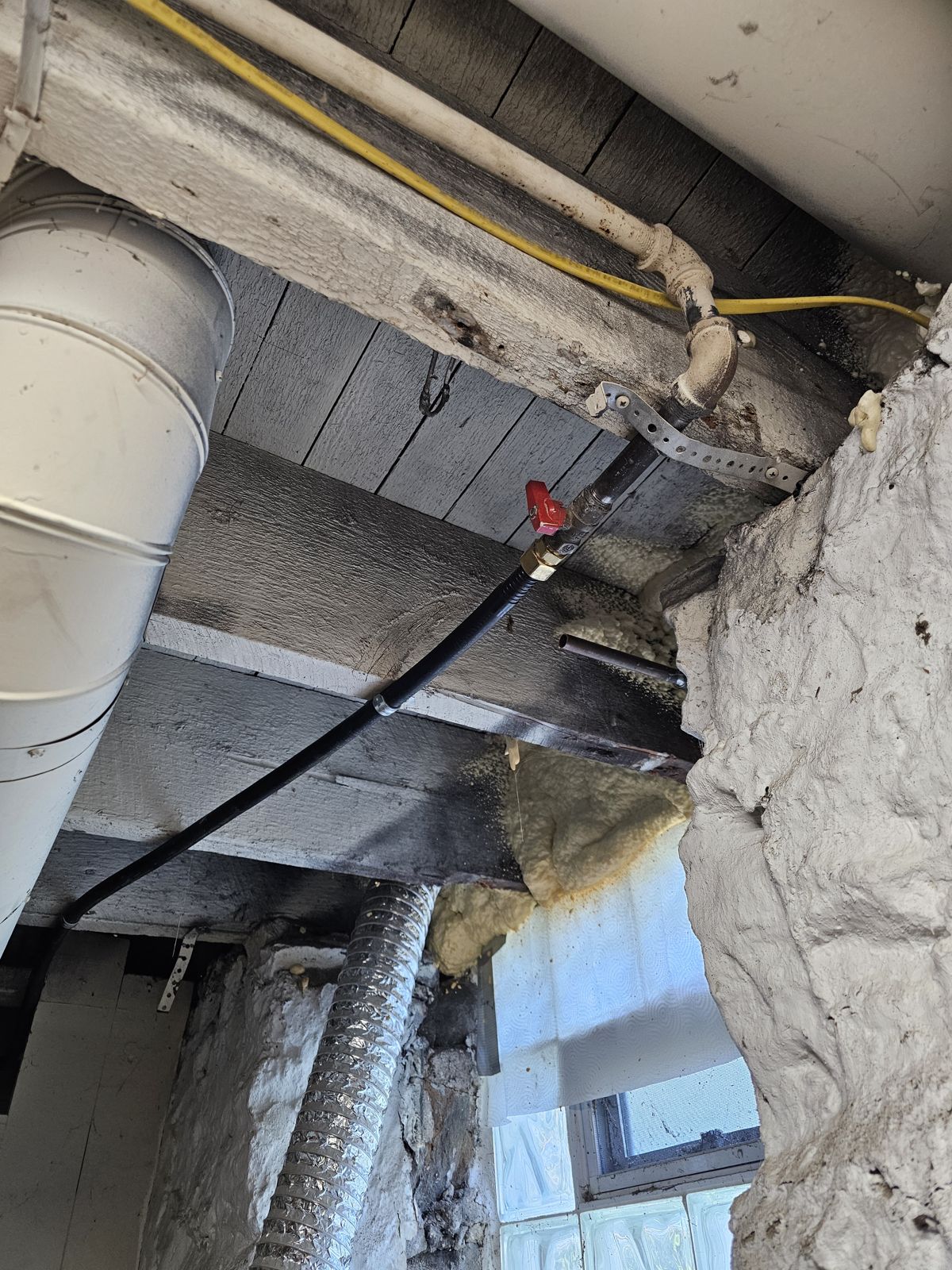
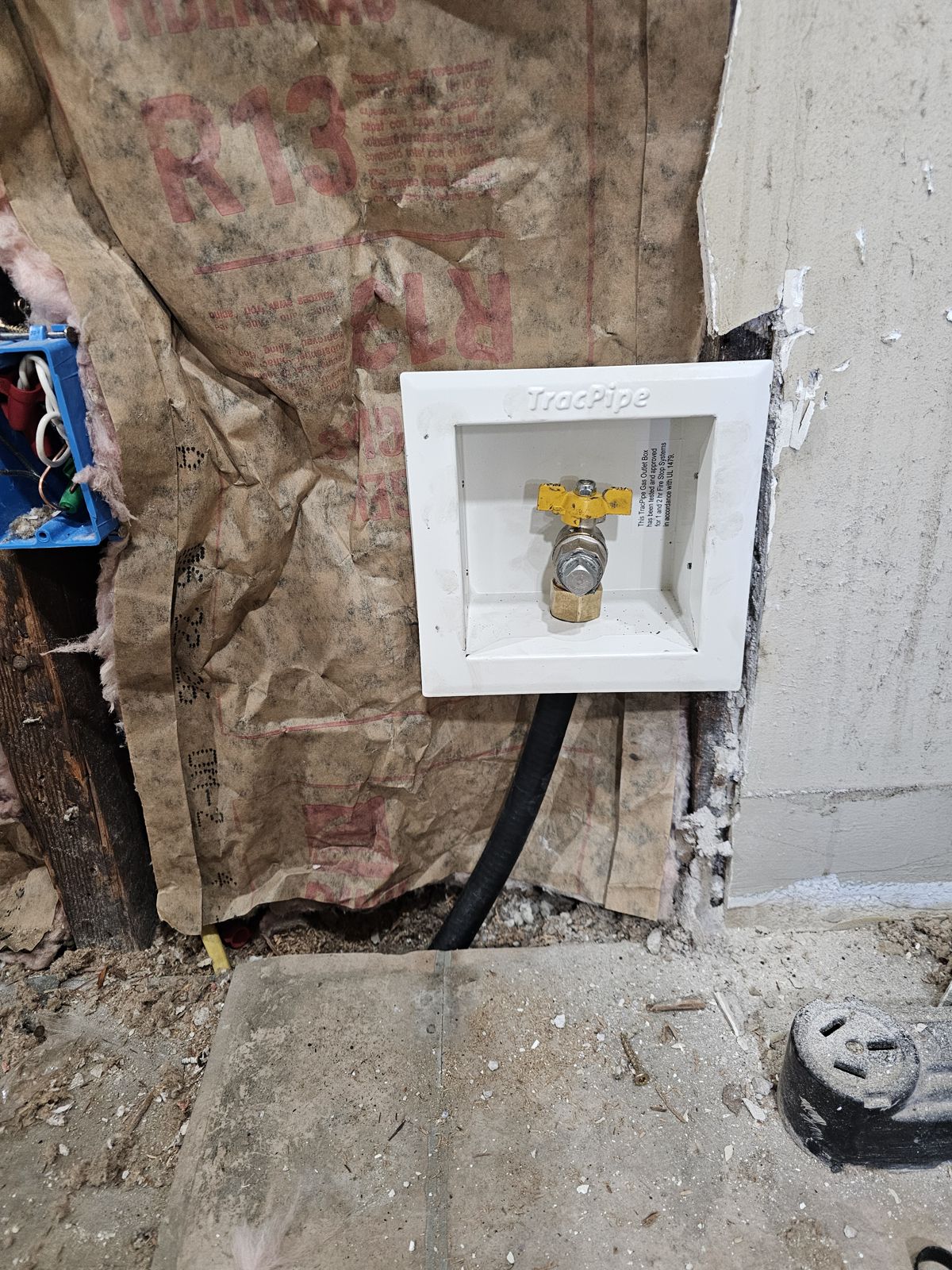
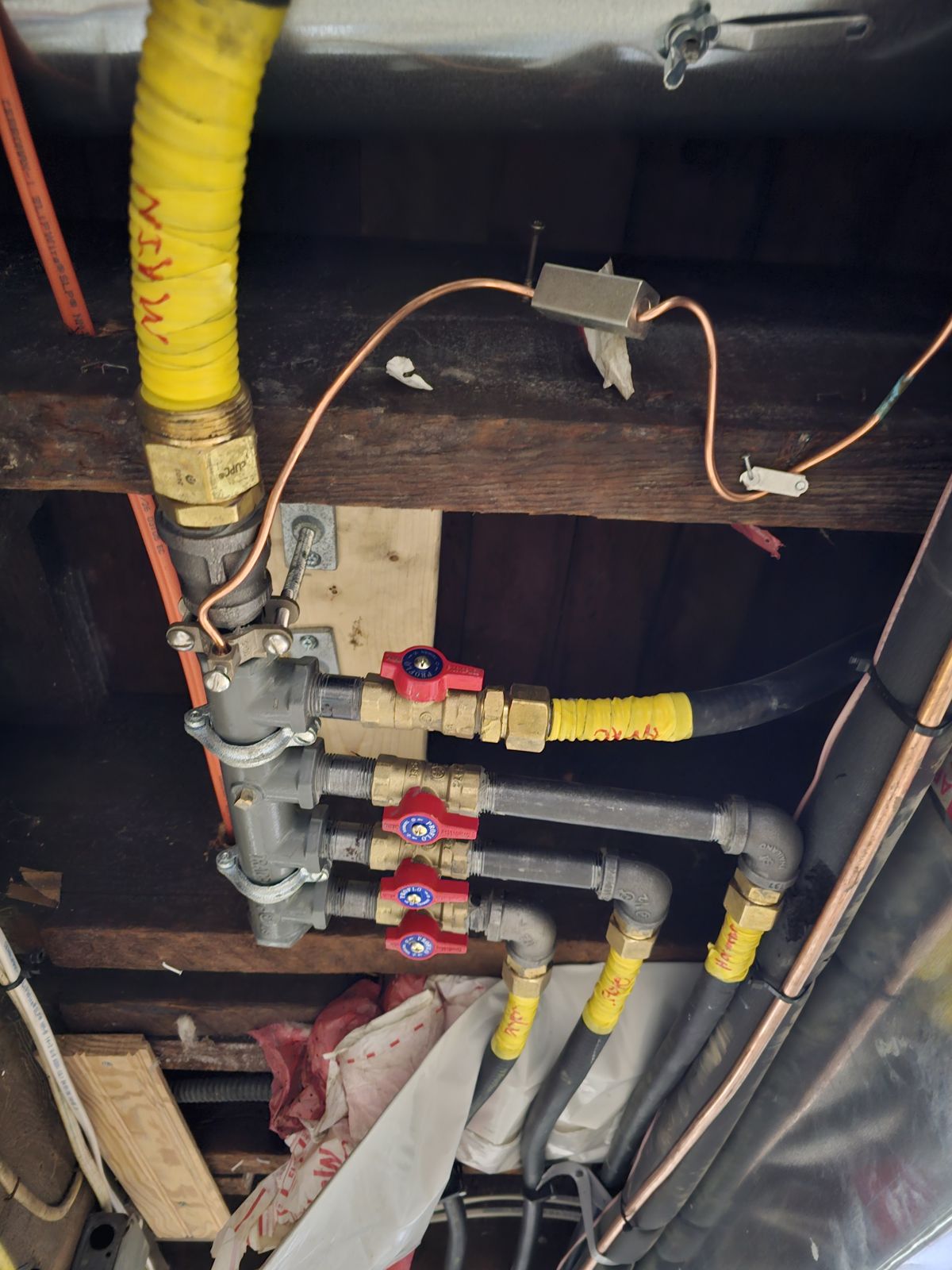
New gas lines for the dryer and the stove. We ran new lines using TracPipe gas line materials and connected them to the old black iron trunk line in the basement.
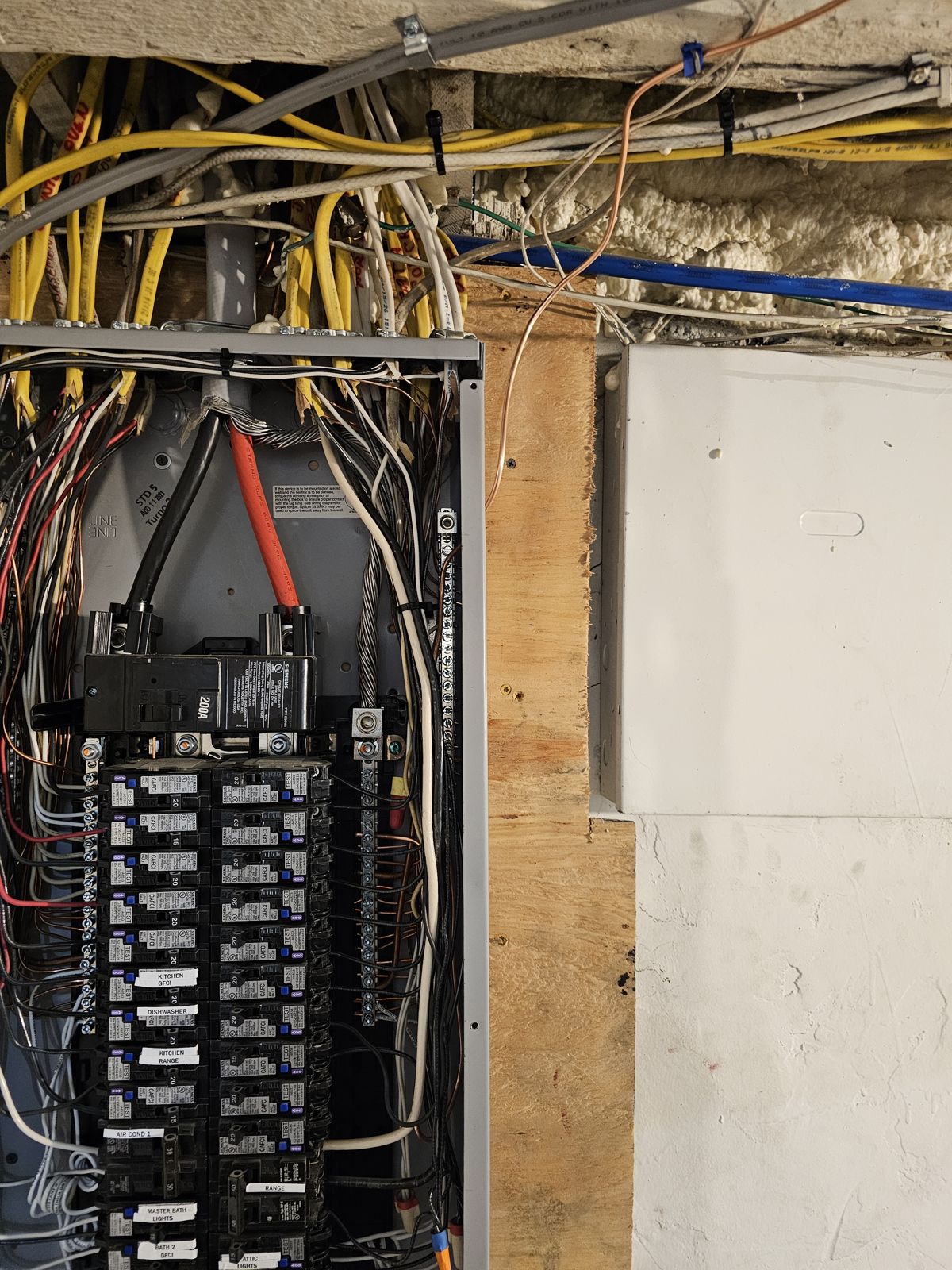
Bonding the gas line. We bond the gas line with #6 copper wire to the neutral bus in the electrical panel. This protects the house from lightning strikes.
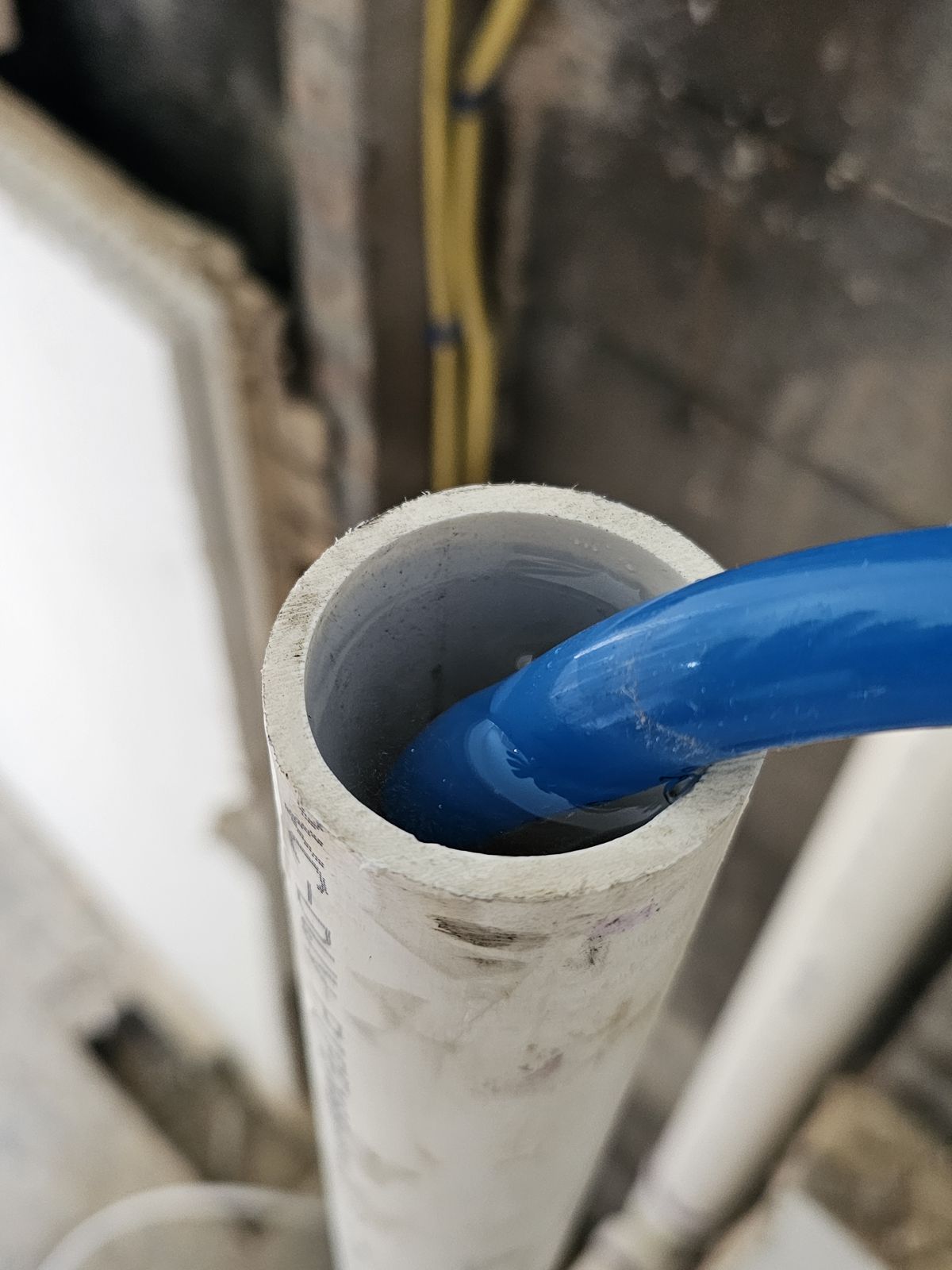
Flood testing and inspection. A few of the photos show how we fill all the drain lines with water and let them sit for a few days. The inspector then comes to make sure there are no leaks. Only after the inspection are we allowed to close up the walls and pour concrete over the new plumbing.
Re-routing a gas line around a sinking porch
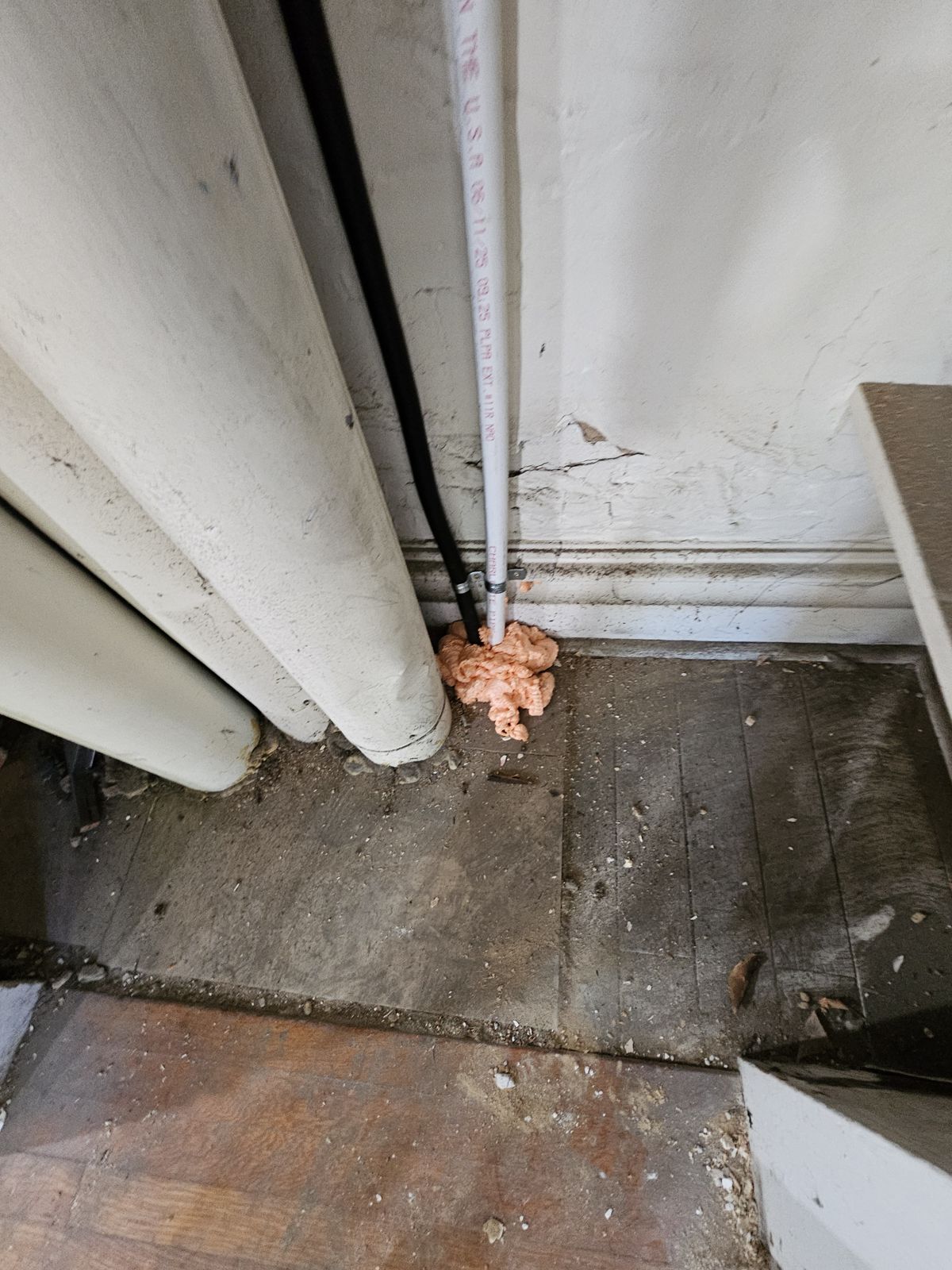
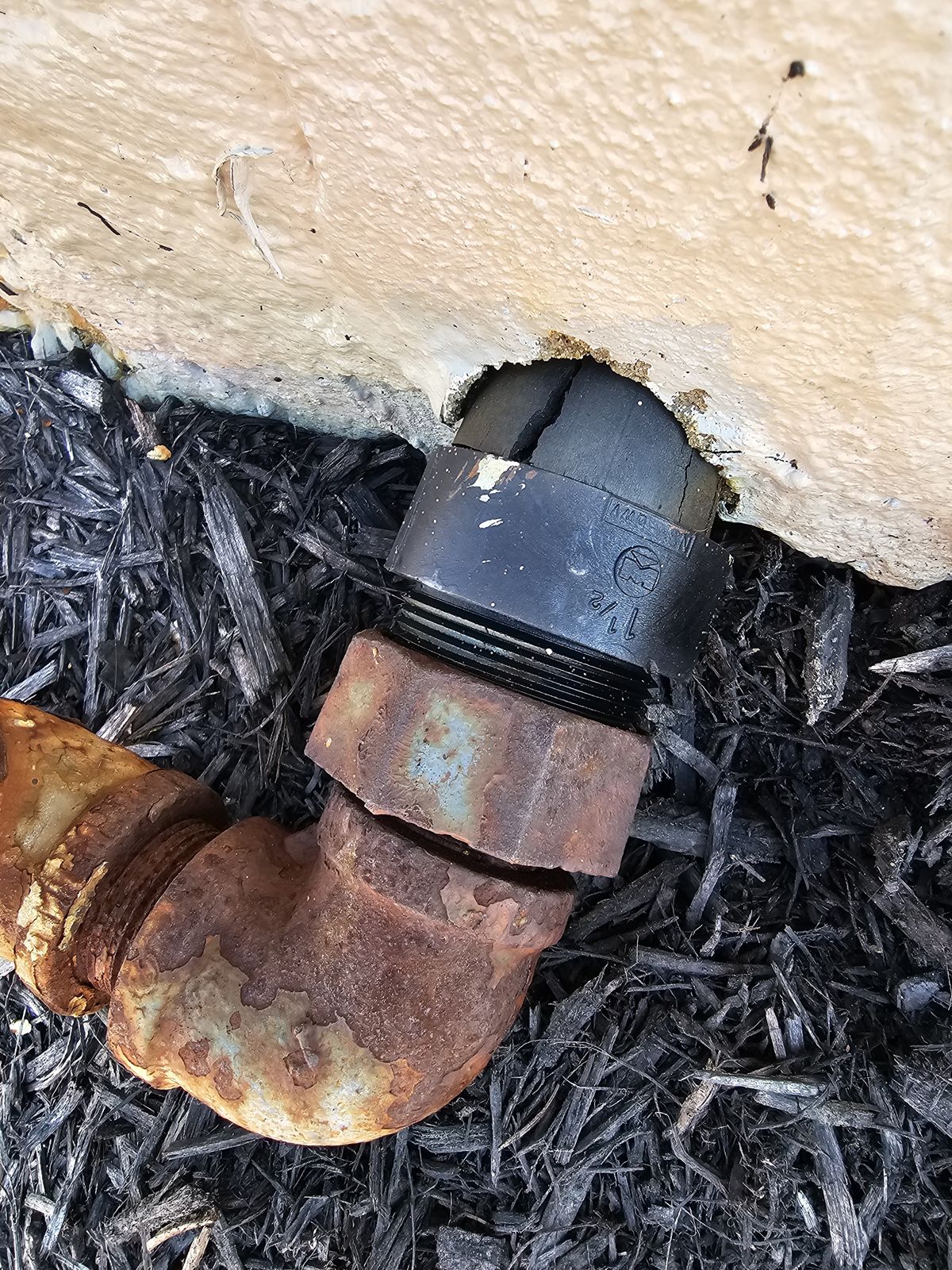
The front porch of this house was sinking onto the old gas line. We could not even remove the old line, and the homeowner did not have $50,000 to fix his porch.
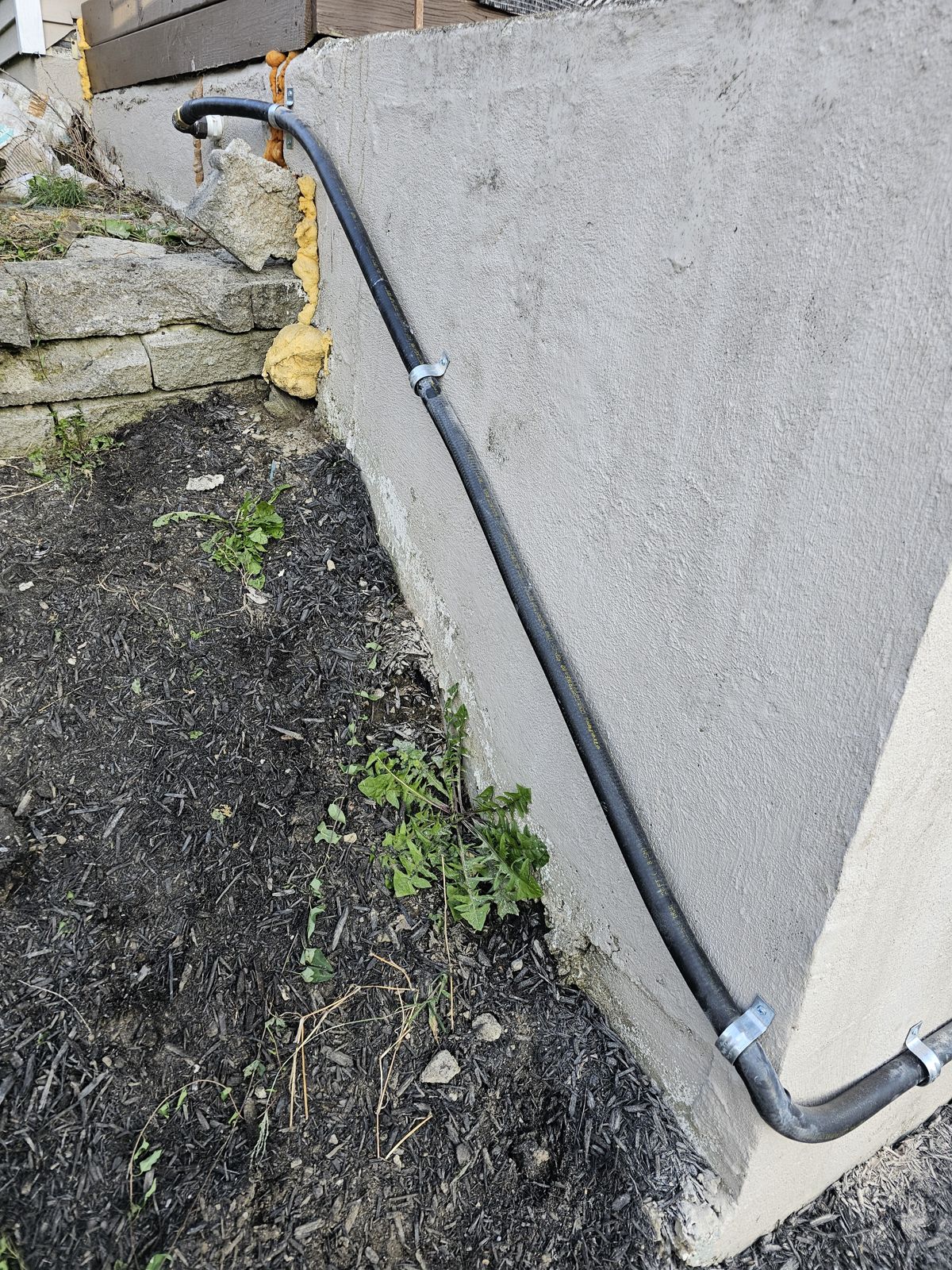
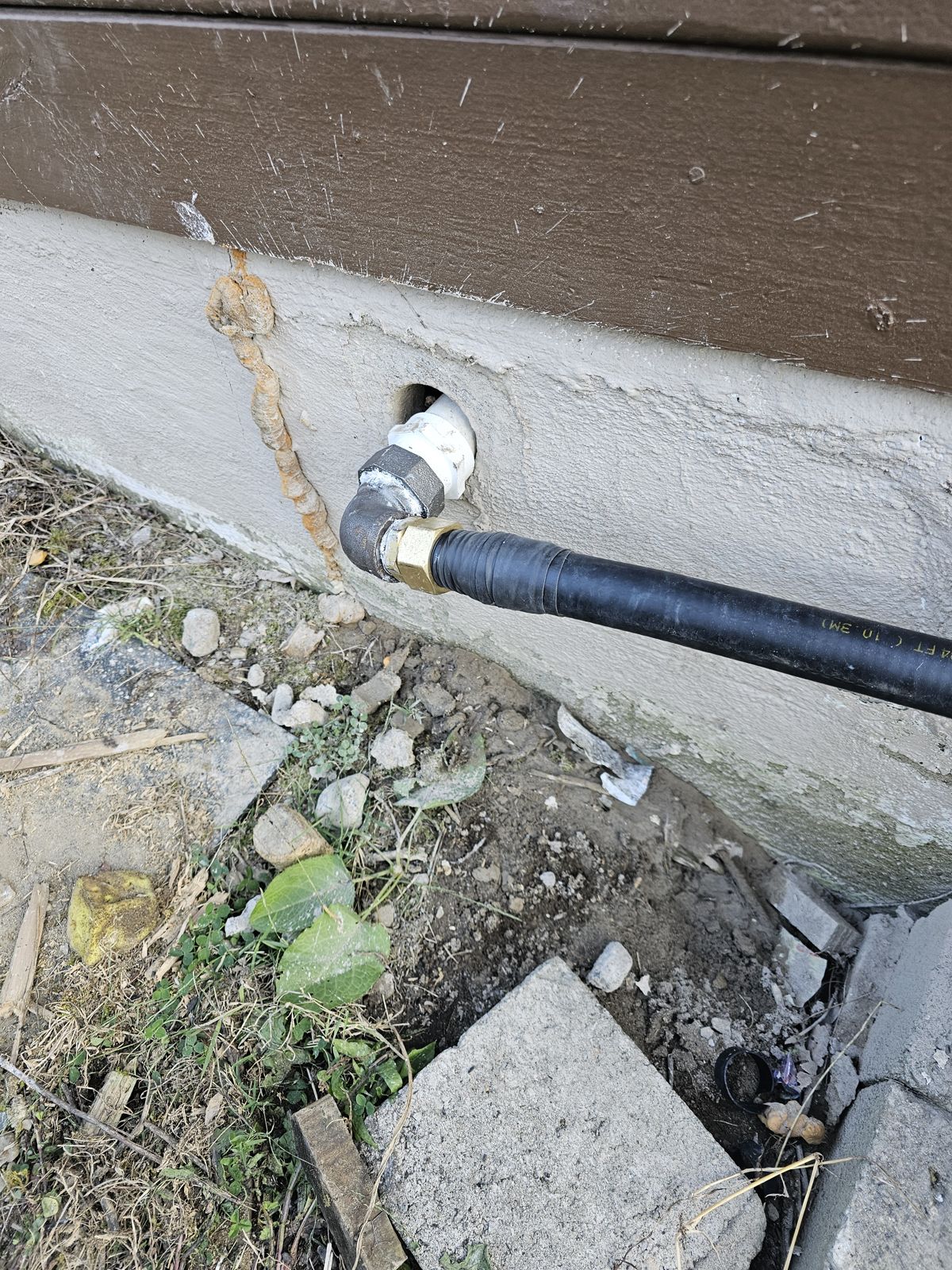
The most cost-effective way to get gas back to the house was TracPipe, a flexible gas pipe. Code allows it outdoors as long as it does not run where a lawnmower or other equipment could hit it. So we re-routed the line around the outside of the house.
We also like to work with homeowners. We would normally patch the opening we made in the wall with concrete, but he wanted to do that himself to save a little money. We are happy to work with our customers that way. Once the plumbing is done, we are glad to let you handle the concrete work if you would rather.
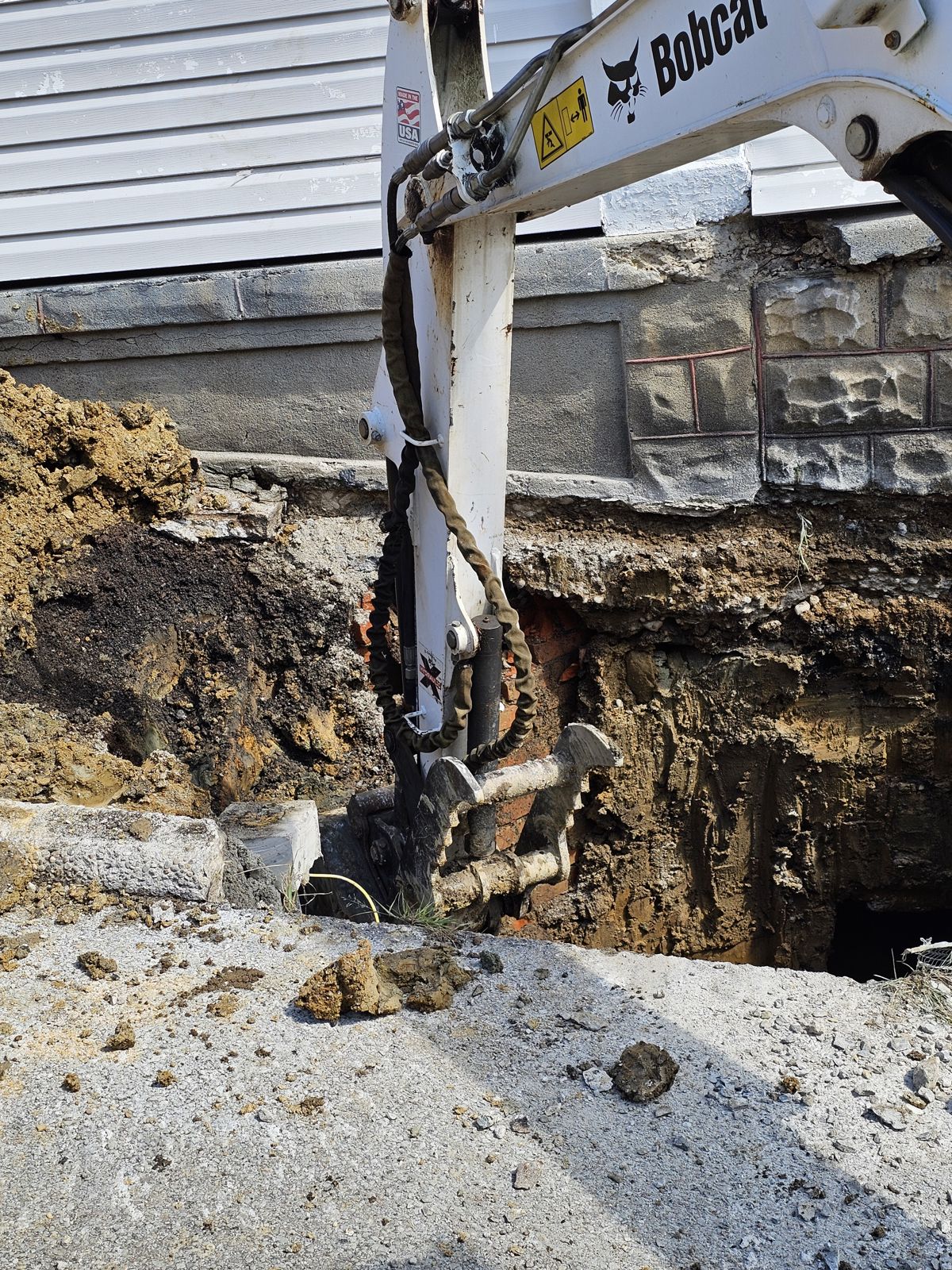
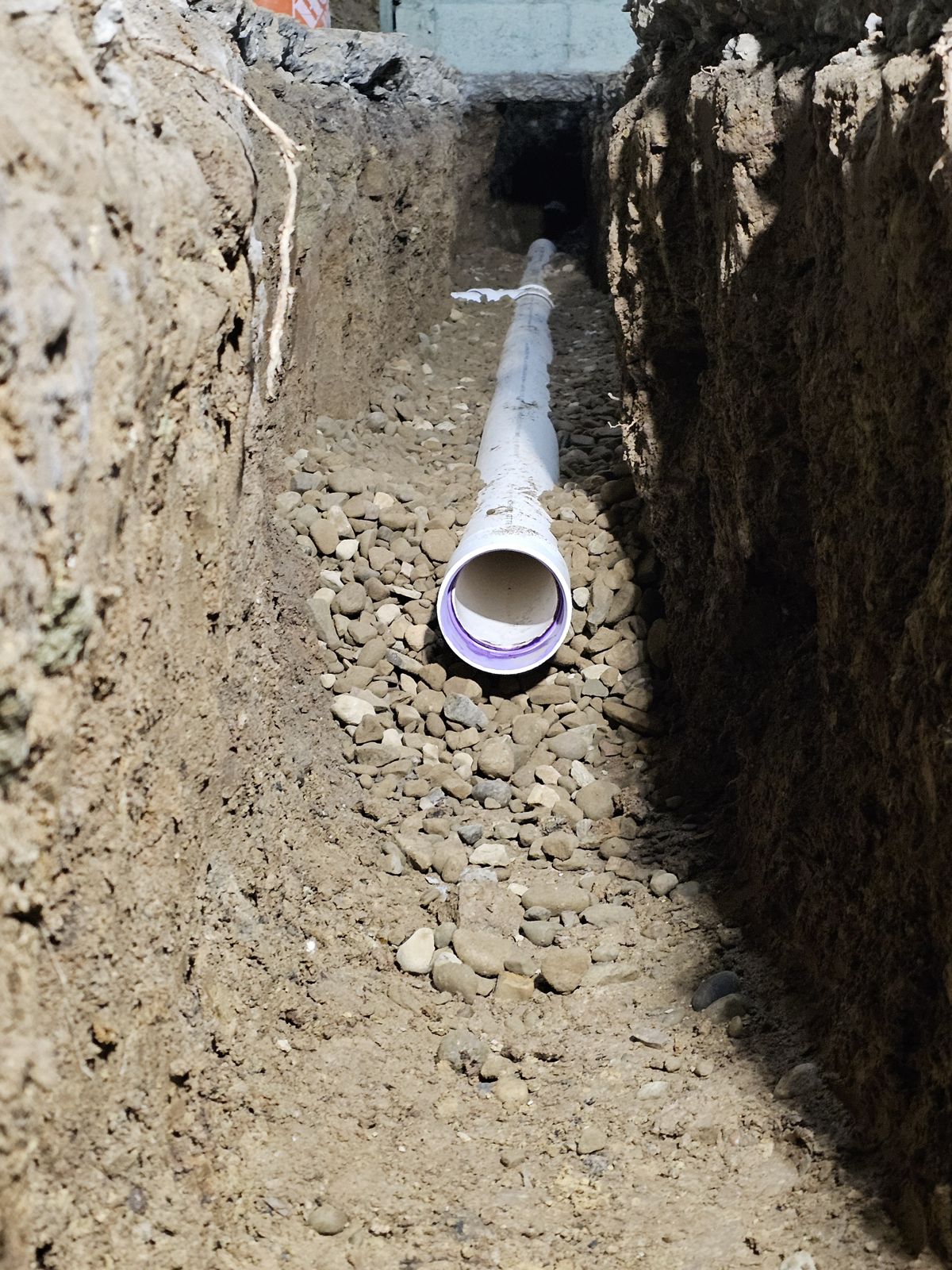
Trenching and new drain lines
This is our current project, a complete house rough-in.
The job is in the Troy Hill area, in a jurisdiction where downspouts must be tied into the sewer. Most places want downspouts disconnected from the sewer, because heavy rainfall can cause the city sewer to back up. To enforce that, they usually require a dye test when a property changes ownership. Troy Hill is one of the few jurisdictions that does not.
Need a plumber?
Call 412-500-4659 or send a request. We will call you back within 24 hours.

